Area Real Estate News & Market Trends

Welcome to the Royer Realty Blog – your go-to resource for local real estate news, market trends, and home values. Stay ahead of the curve with expert insights on the local housing market, plus tips and advice to help you make informed decisions. Whether you're buying, selling, or simply exploring the area, we’ve got you covered. Reach out to us today, and let’s start the conversation!

June 25, 2026

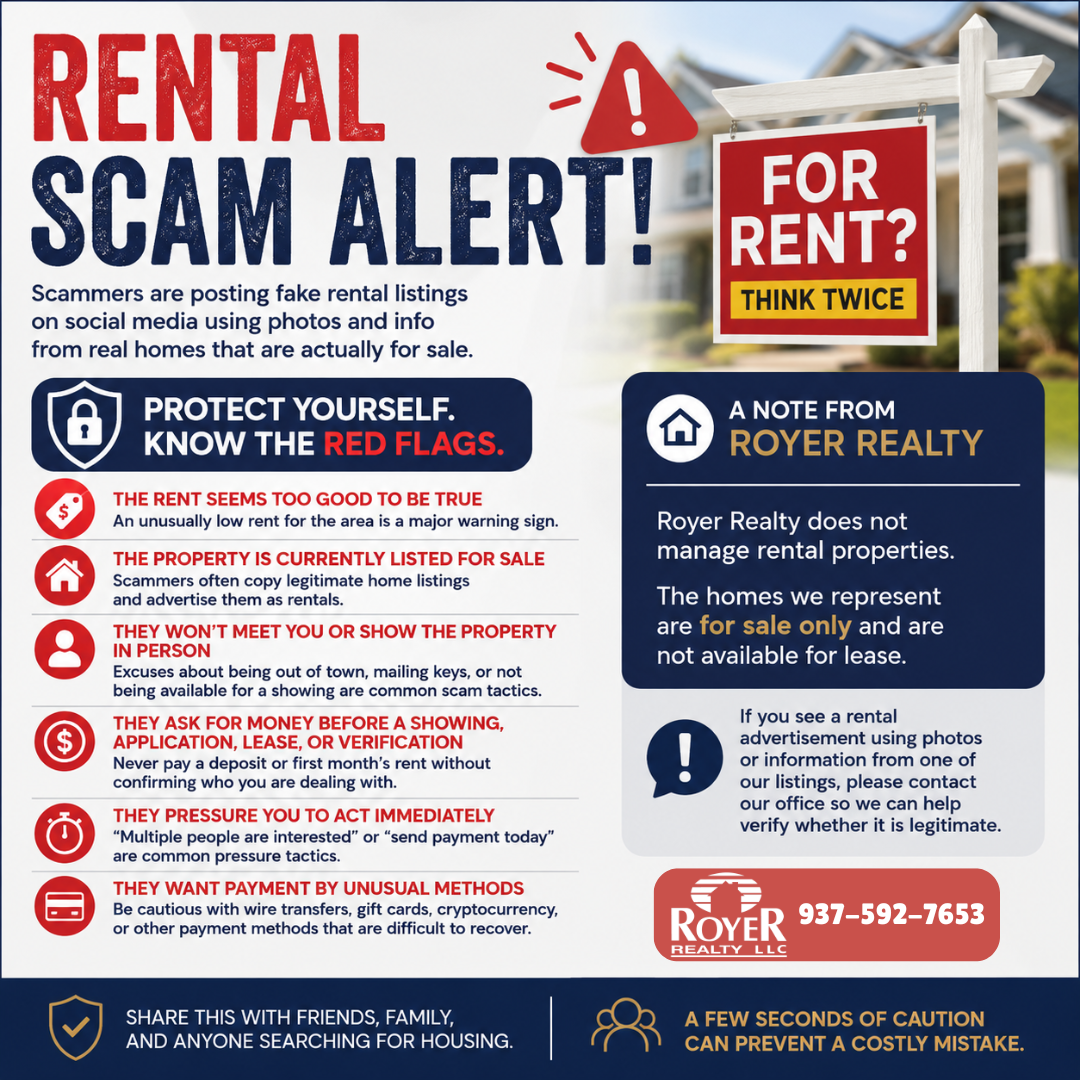
Rental Scams on Social Media: Red Flags to Watch For | Royer Realty

Rental Scams on Social Media: Red Flags to Watch For | Royer Realty Blog Post Image

Rental Scams on Social Media: What Home Seekers Need to Know


Finding a place to live often starts with an online search. Social media has made it easier than ever to find housing opportunities, but it has also created new opportunities for scammers.

Fake rental listings are becoming more common, and scammers often use photos, descriptions, and details copied from legitimate homes. In many cases, the property is actually listed for sale, not for rent.

At Royer Realty, we want our community to stay informed and avoid becoming a victim of a rental scam.

Common Warning Signs of a Rental Scam

The rent is unusually low

If a home appears to be priced far below similar rentals in the area, be cautious. Scammers often use an attractive price to get people to respond quickly.

The property is currently for sale

One of the most common scams involves copying information from real estate listings and reposting the home as a rental. Always verify whether the property owner or listing agent is actually offering the home for lease.

The person will not show the property

Be cautious if someone refuses to meet in person, avoids scheduling a showing, or claims they are unavailable because they are out of town. Requests to send money before seeing the property are a major warning sign.

They request payment before verification

Never send deposits, rent payments, or personal information before confirming who you are working with and having a legitimate rental agreement.

They create a sense of urgency

Scammers often use pressure tactics such as claiming there are many other interested renters or that payment must be made immediately.

They request unusual payment methods

Be careful with requests for wire transfers, gift cards, cryptocurrency, cash, or other payment methods that are difficult to recover.

A Note From Royer Realty

Royer Realty does not manage rental properties. The homes we represent are for sale only and are not available for lease.

If you see a rental advertisement using photos or information from one of our listings, please contact our office so we can help verify whether the advertisement is legitimate.

A few minutes of research can help prevent a costly mistake. Share this information with friends, family, and anyone searching for housing.

Stay safe and stay informed.

#RoyerRealty #RentalScamAwareness #RealEstateTips 

 

Jan. 5, 2026

Reverse Mortgages vs. Traditional Mortgages


Reverse Mortgages vs. Traditional Mortgages: What Homeowners 62+ Should Know

As homeowners reach retirement age, financial needs and housing goals often change. For those age 62 and older, two of the most common options are reverse mortgages—particularly the Home Equity Conversion Mortgage (HECM)—and traditional forward mortgages. Both provide access to your home’s equity, but they function very differently.

What is a Reverse Mortgage (HECM)?

A reverse mortgage, most often a HECM backed by the FHA, allows homeowners 62+ to borrow against the equity in their home without monthly mortgage payments. Instead, the loan is repaid when the homeowner moves out, sells the home, or passes away. It can provide supplemental income, a line of credit, or even funds to pay off an existing mortgage.

How It Differs from a Traditional Mortgage

With a traditional mortgage, homeowners make monthly payments toward principal and interest. This reduces the loan balance over time, building equity. A reverse mortgage works the opposite way—the loan balance grows as interest accrues, while equity may decrease unless home values rise significantly.

Benefits of a Reverse Mortgage

  • No monthly mortgage payments required
  • Access to tax-free funds
  • Flexibility in how to receive proceeds (lump sum, line of credit, monthly payments)
  • Protection with FHA insurance on HECM loans

Considerations and Trade-offs

  • Loan balance increases over time
  • Closing costs and fees can be higher than traditional mortgages
  • Home equity left to heirs may be reduced
  • Borrowers must stay current on property taxes, homeowners insurance, and maintenance

When a Traditional Mortgage May Be Better

  • You want to continue building equity for future use or for heirs
  • You can comfortably make monthly mortgage payments
  • You’re refinancing to lower your interest rate or shorten your loan term
  • You’re planning to sell in the near future and want flexibility


A Quick Look at the Differences

If you prefer to see things side by side, here’s a clear comparison of how a reverse mortgage stacks up against a traditional mortgage. This snapshot makes it easier to decide which option may better align with your retirement and financial goals. ⬇️

Reverse Mortgage vs. Traditional Mortgage: Side-by-Side Comparison

Feature

🔄 Reverse Mortgage (HECM)

🏡 Traditional Mortgage

Monthly Payments

❌ No monthly mortgage payments required

✅ Monthly principal + interest payments required

Equity Over Time

Loan balance grows, home equity may decrease

Loan balance decreases, equity builds over time

When Loan Is Repaid

When you move out, sell, or pass away

Paid monthly until loan is satisfied

Access to Funds

Receive tax-free funds as lump sum, monthly payments, or line of credit

Receive funds only at closing if refinancing or purchasing

Best For

Seniors who want to supplement retirement income and stay in their home

Homeowners who want to build equity, refinance, or lower interest rates

Impact on Heirs

Reduced equity may remain for heirs

More equity may be preserved for heirs


Choosing the Best Option for Your Retirement Goals

The decision often comes down to lifestyle and financial goals. If staying in your home and supplementing retirement income is your priority, a HECM reverse mortgage could be a strong fit. If you prefer to build equity, refinance for savings, or keep a traditional repayment structure, then a standard mortgage might serve you better.


📞 Thinking about whether a reverse mortgage or a traditional mortgage makes sense for you? The team at Royer Realty is here to walk you through your options with clarity and care. Call us today at 937-592-7653 or visit www.royerrealty.com to explore which path fits your financial goals and homeownership journey.


Frequently Asked Questions About Reverse Mortgages vs. Traditional Mortgages

❓ Do I still own my home with a reverse mortgage?
✅ Yes. You remain the homeowner, and your name stays on the title. You’re still responsible for property taxes, homeowners insurance, and basic upkeep.

❓ Can I lose my home with a reverse mortgage?
Only if you fail to meet the borrower obligations, such as paying taxes, insurance, or maintaining the property. Otherwise, you can stay in your home as long as you live there.

❓ Are reverse mortgage funds taxable?
No. The money you receive from a reverse mortgage is considered a loan advance, not income, so it is generally tax-free.

❓ What happens when I pass away or move out?
The loan becomes due, and your heirs can choose to sell the home, pay off the balance, or refinance if they wish to keep it.

❓ Which option leaves more equity for my heirs?
Traditional mortgages usually preserve more equity since the balance decreases over time. Reverse mortgages can reduce equity, but they provide financial flexibility while you’re living.


📞 Still have questions? Let the experienced team at Royer Realty guide you through your options with clear answers and expert care. Call 937-592-7653 or visit www.royerrealty.com today.


Posted in Buyers, Resources, Sellers
Dec. 30, 2025

The Smart Home Tech Every Buyer Will Want in 2026


smarthome tech touchscreen device blog image header


The Smart Home Tech Every Buyer Will Want in 2026

Emerging CES Trends Shaping the Homes of Tomorrow

The future of homeownership is smarter, safer, and more connected than ever—and if the latest announcements from CES 2026 are any indication, today’s buyers are expecting tomorrow’s technology right now. Whether you're preparing to sell a home or simply want to stay ahead of the curve, embracing smart home tech is no longer optional—it's essential.

At Royer Realty, we keep our finger on the pulse of what buyers want. Here's a look at the top smart home technologies gaining traction that will shape real estate preferences in the coming year.


🧠 AI-Driven Home Assistants

Voice assistants have evolved. CES 2026 showcased next-gen systems powered by generative AI—capable of controlling entire homes, learning routines, and adjusting settings proactively. Buyers love the idea of walking into a home that knows how to welcome them.


🔒 Smarter, Seamless Security Systems

Forget clunky cameras. Today’s smart security features include AI-enhanced facial recognition, geofencing, and real-time alerts synced to mobile devices. Systems like Ring, Arlo, and newcomers unveiled at CES offer not just protection, but peace of mind.


🌡️ Energy Efficiency That Pays Off

Eco-conscious buyers are asking for smart thermostats, automated lighting, and solar system monitoring. Devices like Nest Renew and newer CES innovations now let homeowners track energy usage down to the appliance—cutting costs and boosting resale value.


📶 Whole-Home Connectivity

From smart refrigerators to Wi-Fi-enabled laundry machines, homes are becoming ecosystems. CES 2026 introduced enhanced Matter and Thread protocol devices—ensuring interoperability across brands. Buyers in 2026 will expect a seamless experience, not a jumble of mismatched apps.


🚗 EV-Ready Smart Garages

With EV adoption on the rise, smart garages that integrate with vehicle charging, home energy storage, and AI-driven monitoring are hot features. If your home has an EV-ready setup, it’s already ahead of the curve.


📱 Mobile-First Home Management

Buyers now expect to control everything from their phones. Whether it's preheating the oven on the way home or unlocking the front door remotely for a guest, mobile-accessible control systems are a key selling point.


Why This Matters to Buyers (and Sellers) in 2026

Smart home features are no longer luxuries—they're value-boosting essentials. Homes that embrace technology not only attract more interest, but also sell faster and at higher prices, especially among Millennial and Gen Z buyers entering the market.


"Get a jump on tomorrow’s smart home — today. Use this checklist to make sure your next upgrade adds convenience, security, and lasting value."


  1. Must‑Have Devices

    • Energy‑smart thermostat

    • App‑integrated lighting control

    • Smart security camera with AI alerts

  2. Integration Essentials

    • Voice assistant hub

    • Unified app dashboard

  3. Energy‑Saving Settings

    • Nighttime low‑power modes

    • Solar‑powered options

  4. ROI Snapshot

    • Upgrades that pay for themselves in <3 years

    • Features that increase resale appeal


📣 Call to Action:

Thinking about buying or selling a home in the next year? Make sure you're ahead of the curve.

At Royer Realty, we understand what today’s buyers want—and we know how to position your home to meet (and exceed) their expectations. Whether you're upgrading your current space or searching for your future-ready dream home, our team is here to guide you every step of the way.

📞 Call us today at 937-592-7653
🌐 Or visit www.royerrealty.com to connect with a local expert.

Let’s make your next move a smart one.


Posted in Buyers, Resources, Sellers
Dec. 22, 2025

Staging Your Home for Winter Buyers: Holiday Curb Appeal That Sells


winter-home-staging-tips blog image header


Staging Your Home for Winter Buyers

Holiday House Tours and Seasonal Tips That Make Your Home Shine

Selling your home in the winter comes with unique challenges—but also unique opportunities. With the right seasonal touch, you can create a cozy, inviting space that warms buyers' hearts the moment they step through the door (or scroll through your listing photos).

At Royer Realty, we know that first impressions matter, and during the colder months, a thoughtfully staged and festively dressed home can stand out in all the best ways.

Here’s how to wow winter buyers and make your home feel like the one.


❄️ 1. Embrace Cozy Interior Staging

Winter buyers are drawn to warmth and comfort—so make sure your space reflects that.

  • Use soft textures like throw blankets, knit pillows, and area rugs

  • Set the tone with warm lighting (think lamps, string lights, and candles)

  • Add subtle seasonal scents like cinnamon or pine

  • Stage fireplaces (gas or wood) to be focal points


🌲 2. Keep Décor Seasonal, Not Personal

Holiday decorations can add charm, but keep it tasteful and neutral.

  • Stick to a cohesive color palette (gold, silver, white, or natural greens)

  • Avoid overly personalized or religious displays

  • Use real greenery (wreaths, garlands) for a clean, high-end look

  • Highlight focal points like stair railings, mantels, and entryways


🏡 3. Make That Curb Appeal Count

Your home’s exterior is the first thing buyers see—especially in online photos and holiday drive-bys.

  • Clear snow and ice from walkways and driveways

  • Add potted evergreens or lanterns by the front door

  • Use simple string lights to outline the home or porch

  • Keep lawns tidy and decorate with restraint—less is more

Looking for inspiration? Local Logan County neighborhoods are known for their charming Holiday House Tours, and the homes that get the most attention are always those with simple, elegant curb appeal and warm, inviting entryways. Whether it’s a farmhouse porch with plaid blankets and a lit wreath or a modern entry with symmetrical garlands, festive touches can truly win buyers over.


📸 4. Stage for Stunning Photos

Winter light can be tricky, so make your home photo-ready:

  • Take listing photos during midday for the best natural light

  • Turn on all lights in the home—even lamps and under-cabinet lighting

  • Use mirror accents or metallics to reflect light and add brightness


📣 Call to Action:

Selling in the winter doesn't have to be stressful—it can be strategic. With the right seasonal staging and festive curb appeal, your home can attract serious buyers and shine in a slower market.

Let Royer Realty guide you with expert home staging tips, local market insight, and personalized real estate support.

📞 Call us at 937-592-7653
🌐 Or visit www.royerrealty.com to schedule your complimentary home consultation.

Make your home the one buyers remember this winter—warm, welcoming, and ready to sell!


Posted in Resources, Sellers
Dec. 16, 2025

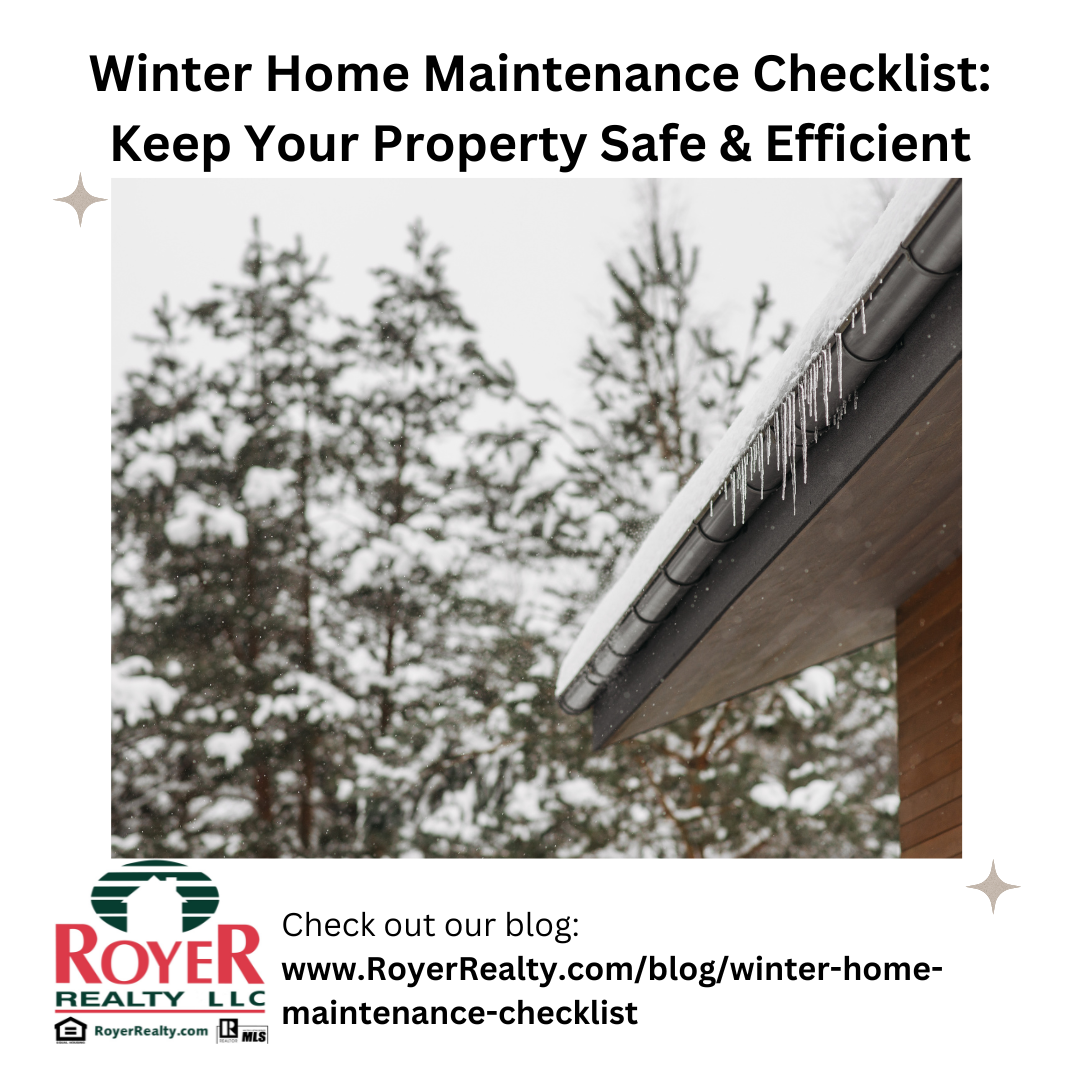
Winter Home Maintenance Checklist: Keep Your Property Safe & Efficient


Snow-covered home with ice in the gutters for blog header image


Winter Home Maintenance Checklist: Keeping Properties Safe and Efficient in Cold Weather

As the winter season settles in across Ohio, taking proactive steps to maintain your home is more than a good idea—it’s essential. Cold temperatures, snow, and ice can cause a host of issues if your property isn’t properly prepared. At Royer Realty, we want to help homeowners and property investors alike safeguard their homes, maximize energy efficiency, and avoid costly repairs with a smart, seasonal approach.

Here’s your essential winter home maintenance checklist:

✅ Inspect and Service Your Heating System

Schedule a professional HVAC checkup to ensure your furnace or heat pump is working efficiently. Change air filters regularly, and consider upgrading your thermostat to a smart model for better control and energy savings.

✅ Seal Windows and Doors

Drafts are a major source of heat loss in winter. Apply weather stripping or caulk around doors and windows to keep warm air in and cold air out.

✅ Protect Your Pipes

Frozen pipes can burst and cause significant water damage. Insulate exposed plumbing, especially in basements, crawl spaces, or attics. Let faucets drip during extremely cold nights to prevent freezing.

✅ Clean Gutters and Downspouts

Clear out leaves and debris to prevent ice dams, which can lead to roof damage and interior leaks.

✅ Check the Roof and Attic

Look for missing or damaged shingles and ensure your attic is properly insulated and ventilated to avoid ice buildup.

✅ Test Safety Devices

Check smoke detectors, carbon monoxide detectors, and fire extinguishers. Winter is peak season for house fires and CO buildup from heating systems.

✅ Prep Outdoor Spaces

Drain and store hoses, shut off exterior faucets, and secure any outdoor furniture or décor. Ensure walkways are clear and stock up on salt or sand for icy paths.


Call to Action:

Winter may be beautiful, but it can be tough on your home. A little maintenance now can prevent big headaches later!

Whether you're a homeowner preparing your residence or an investor managing multiple properties, Royer Realty is here to help. Our team offers local expertise, trusted vendor referrals, and real estate insight tailored to the Logan County area.

Have questions or need a professional recommendation?
📞 Call us at 937-592-7653 or visit 🌐 www.royerrealty.com today — let’s keep your home safe, warm, and worry-free all winter long!


Posted in Buyers, Resources, Sellers
Dec. 10, 2025

What Happens After Closing? A Checklist for New Homeowners


Happy Ohio family unpacking boxes in their new home after closing


Congratulations! Closing day has come and gone, the keys are in your hand, and your dream home is officially yours. While the big steps are behind you, there are still a few important tasks to tackle after closing to help you fully settle into your new home—and new life.

To make the transition as smooth as possible, we’ve created a helpful post-closing checklist. From updating your address to enrolling kids in a new school, here’s everything you need to remember as a new homeowner in Ohio:


✅ Post-Closing Checklist for New Homeowners

1. Change Your Address
Notify the following organizations of your new address:

  • U.S. Postal Service (start mail forwarding) https://www.usps.com/

  • Banks and credit card companies

  • Employer and payroll provider

  • Insurance providers (auto, health, life)

  • Utility providers (cell phone, internet, etc.)

  • Subscription services (magazines, streaming, etc.)

2. Update Your Driver’s License & Vehicle Registration
Ohio residents must update their license and vehicle registration within 30 days of moving. Visit your local BMV or go online to update your information.  https://bmv.ohio.gov

3. Transfer or Set Up Utilities (this may need completed prior to closing depending on possession)
Make sure all utilities are in your name, including:

4. Notify Healthcare Providers
Update your address with:

  • Doctors, dentists, and specialists

  • Pharmacies

  • Your health insurance company

5. Don’t Forget About Your Pets!
Contact your veterinarian to update your pet’s records and license information. If you’ve moved to a new area, it may be time to find a new vet.

6. Update Voter Registration
Moved to a new county or district? Be sure to update your voter registration so you can vote in local, state, and federal elections. You can do this quickly online at the Ohio Secretary of State’s website.  https://olvr.ohiosos.gov/

7. Enroll in School (If Applicable)
If you have school-aged children, connect with your new school district to register them and gather any required documentation (proof of residency, transcripts, etc.).  https://www.royerrealty.com/schools/

8. Secure Your Home
Consider these steps to increase safety:

  • Change the locks or rekey doors

  • Test smoke and carbon monoxide detectors

  • Review your homeowners insurance policy for adequate coverage

  • Set up a home security system if desired

9. Meet the Neighbors
Don’t underestimate the power of a friendly introduction. Building relationships in your new community can help you feel settled and supported faster.


Start Your New Chapter with Confidence

At Royer Realty, our commitment to you doesn’t end at closing. We’re here to be a trusted resource—whether you’re moving across Logan County or into your first Ohio home. If you ever need a contractor referral, market advice, or just want to say hi, don’t hesitate to reach out.

📞 Call us at 937-592-7653 or visit www.royerrealty.com for expert real estate support—before, during, and after your move.

Welcome home. We’re glad you’re here. 🏡


Posted in Buyers, Resources, Sellers
Dec. 2, 2025

Building Your Credit Score to Improve Home Loan Options


image of credit score rankings blog image header


Building Your Credit Score to Improve Loan Options for Buying a Home in Ohio

Thinking about buying a home in Ohio? One of the most important steps in the journey toward homeownership is making sure your credit score is in good shape. Your credit score plays a major role in determining your mortgage loan options—including the interest rate, down payment, and overall approval. Whether you're a first-time buyer or planning your next move, strengthening your credit can make a big difference.

Why Your Credit Score Matters

Lenders use your credit score to evaluate how risky it is to lend you money. A higher score typically means better loan offers, lower interest rates, and more flexible financing terms. In Ohio’s competitive housing market, a strong credit profile can give you an edge.

Here’s a quick look at how scores can impact mortgage opportunities:

  • 740 and above – Excellent: Access to the best rates and terms

  • 700–739 – Good: Very favorable options

  • 620–699 – Fair: Some loan programs available, but rates may be higher

  • Below 620 – Poor: Limited options, may need credit repair first

5 Ways to Build Your Credit Before Buying a Home

  1. Check Your Credit Report
    Request your free credit report at AnnualCreditReport.com and review it for errors or outdated information.

  2. Pay Bills On Time
    Your payment history makes up 35% of your credit score. Even one late payment can hurt, so set up reminders or autopay.

  3. Reduce Credit Card Balances
    Aim to keep your credit utilization below 30%. Paying down high balances can give your score a quick boost.

  4. Avoid Opening New Credit Accounts
    Each new inquiry can slightly reduce your score. Wait until after you’ve closed on a home before applying for new credit.

  5. Work With a Financial Advisor or Credit Counselor
    If you're struggling, professionals can help you create a game plan tailored to your financial situation.

Credit and Ohio Mortgage Programs

Ohio offers a range of mortgage assistance programs for qualified buyers, like OHFA (Ohio Housing Finance Agency) loans, which may still be accessible with average credit scores. However, the better your credit, the more options and savings you’ll have long-term.


Ready to Turn Your Credit Into Keys?

Improving your credit is one of the smartest investments you can make before buying a home. And when you're ready, the experienced team at Royer Realty is here to guide you every step of the way. Whether you're just beginning the process or ready to start house hunting in Logan County or anywhere in West Central Ohio, we’re your trusted local experts.

📞 Call us today at 937-592-7653
🌐 Or visit www.royerrealty.com to browse available homes and connect with a friendly, knowledgeable agent.

Let’s turn your financial foundation into a front porch view you love.


Posted in Buyers, Resources
Nov. 24, 2025

Can You Use a USDA Loan to Buy Vacant Land?


photo of fields - blog header image

Can a USDA Loan Be Used for Vacant or Unimproved Land?

If you're dreaming of building your own home in a peaceful rural setting, you might be wondering if a USDA loan can help you finance the purchase of vacant or unimproved land. While USDA loans offer great benefits—like zero down payment and affordable interest rates—they do come with specific requirements.

Here’s what you need to know.


🏡 USDA Loan Basics

The USDA (U.S. Department of Agriculture) loan program is designed to help low- to moderate-income buyers purchase homes in eligible rural areas. These loans are backed by the federal government and provide 100% financing for qualifying properties. However, USDA loans cannot be used for raw land alone—but that doesn't mean land is off the table entirely.


🚧 Can You Buy Land With a USDA Loan?

Yes, but only if you plan to build a home on it.

You can’t use a USDA loan to purchase vacant or unimproved land with no immediate plans for construction. However, the USDA does offer a single-close construction-to-permanent loan, which allows eligible buyers to:

  • Purchase the land
  • Finance the construction of a new home
  • Transition to a permanent mortgage—all in one loan

This option is ideal for buyers looking to build on rural property while benefiting from USDA’s favorable loan terms.


📏 Land & Property Requirements

To qualify for a USDA loan involving land and new construction, several criteria must be met:

  • The land must be in a USDA-eligible rural area.
    You can check eligibility using the USDA Property Eligibility Map.

  • The site must have road frontage and access to a publicly maintained road.
    Private roads may be acceptable, but they must be accessible year-round and meet local zoning standards.

  • The land cannot be income-producing.
    USDA loans are strictly for residential use—no commercial farming or rental properties.

  • Utilities and infrastructure must be accessible or planned.
    If you’re building, there should be a clear path to get electricity, water, and sewage to the home site.

  • The construction must meet USDA-approved guidelines.
    This includes working with an approved builder and following strict timelines and inspection protocols.

🧑‍🌾 Can You Use a USDA Loan to Buy Vacant Land for Farming?

If you're hoping to buy land strictly for farming or agricultural purposes, it's important to understand the distinction between USDA Rural Development home loans and USDA farm loans.

The USDA loan we're discussing in this blog—often called the USDA Guaranteed or Direct Home Loancannot be used to purchase vacant land intended for farming, ranching, or any type of income-generating agricultural use. These residential loans are strictly for owner-occupied, primary residences in eligible rural areas.

However, if your goal is to operate a farm, the USDA does offer separate programs through its Farm Service Agency (FSA) that are specifically designed to support:

  • Beginning farmers and ranchers
  • Minority or underserved farmers
  • Purchasing farmland, livestock, and equipment
  • Farm ownership and operating costs

These USDA farm loans have their own eligibility criteria, funding limits, and application processes. They're a powerful tool if you’re looking to buy agricultural land or expand an existing farm business.

For more information on USDA agricultural loan programs, visit the USDA Farm Service Agency website.


🛠️ How a USDA Construction Loan Works

USDA construction loans are less common and not offered by all lenders. Here’s how they typically work:

  1. Pre-approval: You qualify based on your income, credit, and location.

  2. Land + build plan: You identify the land and home you want to build.

  3. Single-close: Instead of two loans (one for land and one for the home), you get one loan that converts into a standard USDA mortgage after construction is complete.


✅ Is a USDA Construction Loan Right for You?

If you're committed to building a home in a rural area, a USDA construction-to-permanent loan can be an excellent option. Just make sure to work with a knowledgeable real estate agent and lender who understand USDA requirements inside and out.


📞 Ready to Build Your Dream Home? Let’s Talk!

At Royer Realty, we specialize in helping homebuyers and landowners navigate USDA loan requirements and find the perfect rural property to build on. Whether you're searching for eligible land or want to connect with a USDA-approved lender, we’re here to guide you every step of the way.

Give us a call at 937-592-7653 or visit www.royerrealty.com to get started. Your rural dream home is closer than you think!

Posted in Buyers, Resources, Sellers
Nov. 18, 2025

How to Vet a Contractor or Home Service Provider


How to Vet a Contractor or Home Service Provider in Logan County, Ohio


One of the first questions new homeowners ask after moving into their home is: “Who do I call for repairs, remodeling, or lawn care?” Whether it’s plumbing, painting, HVAC, or landscaping, finding a reliable local contractor or service provider is crucial—but it can be tough if you're new to the area.

At Royer Realty, we understand how important it is to work with professionals you can trust. That’s why we’ve put together this quick guide to help you confidently vet any contractor or service provider in Logan County, Ohio.


Tips for Vetting Local Contractors & Home Service Providers

1. Ask for Recommendations
Start by asking your real estate agent (us!), neighbors, or local Facebook groups for referrals. Word-of-mouth from trusted locals is often the best way to find quality professionals.

2. Check Credentials
Always ask for:

  • Proof of insurance (liability and workers' comp)

  • Licenses (if required for the trade)

  • Business registration with the state of Ohio
    You can also verify contractors via the Ohio Secretary of State’s website or check if they're accredited by the Better Business Bureau.

3. Look at Reviews — But Dig Deeper
Online platforms like Google, Facebook, and Yelp are useful, but also look at the tone and consistency of reviews. One or two bad experiences shouldn't scare you off—unless they're recent or repeated.

4. Ask for References and Photos of Past Work
A reputable contractor will gladly provide local references and examples of completed jobs. Don’t be afraid to call previous clients and ask about their experience.

5. Get Multiple Quotes in Writing
For larger jobs, get at least two or three estimates. Ensure the quotes are detailed—covering materials, labor, timelines, and payment schedules—so you can make a fair comparison.

6. Watch for Red Flags
Be cautious of:

  • Extremely low bids (often too good to be true)

  • Requests for large upfront payments

  • No written contract or unclear terms

7. Support Local, Established Businesses
When possible, work with Logan County-based contractors and service providers. Supporting local builds relationships, boosts the community, and often means faster service when you need it most.


We’re Here to Help You Connect with Local Pros

At Royer Realty, we’re more than real estate agents—we’re your local resource. Over the years, we've built strong relationships with reputable plumbers, electricians, roofers, landscapers, painters, and more right here in Logan County.

Looking for a trusted referral? Just ask!

📞 Call us at 937-592-7653 or visit www.royerrealty.com to get connected with our network of local service providers. Whether you're buying, selling, or settling in, we're here to make every step easier.

Royer Realty – Local Knowledge. Trusted Experience. Real Results.


Let me know if you'd like this post adapted for email or social media, or if you want to incorporate backlinks to specific local businesses you refer!


Posted in Buyers, Resources, Sellers
Nov. 11, 2025

Property Tax Relief for Disabled Veterans and Surviving Spouses in Ohio

Disabled Ohio veteran and service dog - blog header image


Homestead Exemption for Disabled Veterans and Surviving Spouses in Ohio: What You Need to Know Before December 31

If you’re a 100% disabled veteran or the surviving spouse of one, you may be eligible for meaningful property tax relief through Ohio’s enhanced Homestead Exemption. This benefit offers a reduction in taxes on up to $50,000 of your home's market value—a significant savings for those who’ve served. But there’s a deadline and documentation required, so it’s important to act before December 31 of the filing year.


💡 What Is the Homestead Exemption?

The Homestead Exemption allows eligible individuals to receive a property tax reduction on up to $50,000 of the home’s market value and up to one acre of land. This applies to real property and manufactured or mobile homes used as a principal place of residence.


🪖 Who Qualifies for the Disabled Veterans Homestead Exemption?

To qualify, the applicant must be:

  • A veteran with a 100% total disability rating from the Department of Veterans Affairs (VA), or

  • Receiving 100% compensation based on individual unemployability for service-connected disabilities.

To apply, you’ll need:

  • A copy of your DD214 (military discharge papers)

  • A VA award letter showing 100% disability or 100% compensation

  • For unemployability claims, the VA’s approval notice for individual unemployability status


❤️ Who Qualifies as a Surviving Spouse?

An eligible surviving spouse must:

  1. Have been married to a veteran who was receiving the exemption at the time of death

  2. Have occupied the home at the time of the veteran’s death

  3. Maintain ownership of the home or continue to live there if part of a qualified housing cooperative

  4. Not have remarried (the benefit ends the year after remarriage)


📋 Ownership Requirements

The property must be owned by an individual, not a corporation, LLC, or other legal entity. Acceptable forms of ownership include:

  • A deeded individual

  • A purchaser under a land installment contract

  • A life tenant under a life estate

  • A mortgagor (borrower)

  • A trustee or settlor of a trust

  • A shareholder in a qualified housing cooperative

You may need to provide supporting documents such as trust agreements, contracts, or mortgage paperwork.


📅 Deadline: File with the County Auditor by December 31

To receive the exemption for the current tax year:

  • File your application with the county auditor by December 31

  • If you also qualified for the exemption in a previous year but did not file, you may be able to submit a late application—see instructions on the form for eligibility.


✅ Next Steps

  1. Confirm your eligibility and gather the required documents

  2. Review the full instructions on the Homestead Exemption form

  3. Submit your application to your county auditor before the deadline


🏡 Need Help Navigating the Process? Royer Realty Is Here for You.

At Royer Realty, we proudly serve the heroes in our community. If you're a veteran or surviving spouse and have questions about eligibility, documentation, or how this exemption might affect your property value or taxes, give us a call.

📞 937-592-7653
🌐 Visit: www.royerrealty.com

We’re here to make sure you receive the benefits you’ve earned. Let us help you protect your home, your investment, and your peace of mind.


Posted in Buyers, Resources, Sellers