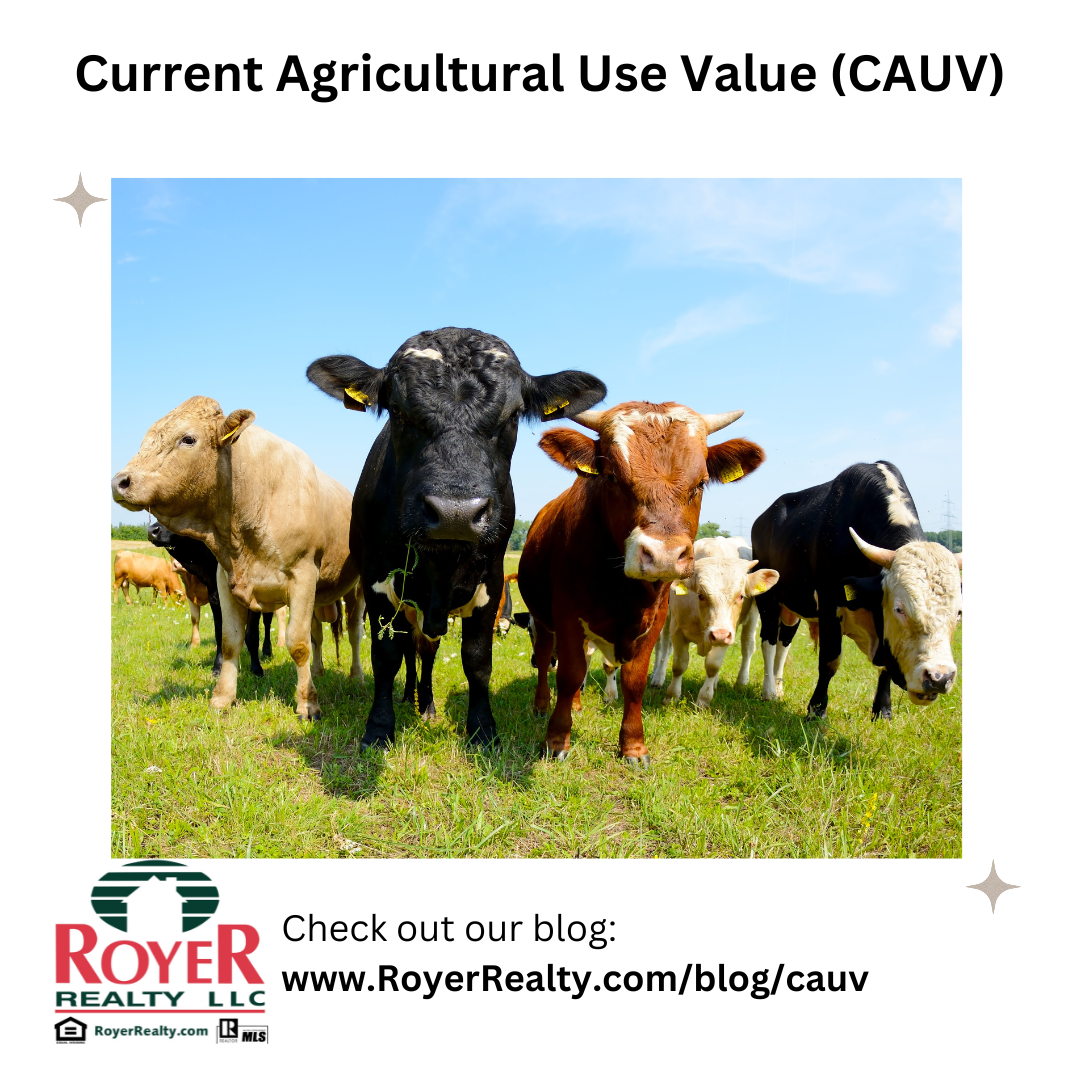
CAUV Tax Reduction in Ohio: A Smart Strategy for Landowners
If you own farmland in Ohio, the Current Agricultural Use Value (CAUV) program could substantially lower your property taxes—often much lower. Established in 1973, the CAUV program is an Ohio property tax program that allows farmland to be taxed based on its agricultural value rather than its full market value. This results in significant tax savings for landowners who use their land primarily for agriculture.
(Visit the Ohio Department of Taxation's website for more details: https://tax.ohio.gov/government/real-state/cauv)
Who Qualifies for CAUV?
To be eligible, your land must meet one of two criteria in the three years before applying (logancountyohio.gov, co.logan.oh.us):
- At least 10 acres devoted exclusively to commercial agriculture, or
- Fewer than 10 acres, but with an average annual gross income of at least $2,500 from farming.
Commercial agriculture includes crops, livestock, timber, apiary, nursery stock, even conservation uses such as wetlands and buffer strips (logancountyohio.gov).
How to Apply and Maintain CAUV
- Application window opens on the 1st Monday in January and closes prior to the 1st Monday in March—in Logan County this means submitting initial or renewal forms (plus the $25 initial fee) between those dates each year (logancountyohio.gov).
- By the 2nd Tuesday in March, the auditor reviews applications and notifies, by certified mail, anyone who missed the deadline (logancountyohio.gov).
- The 1st Monday in June is the cut-off for land inspections to confirm agricultural use (logancountyohio.gov).
- Denial notices, if applicable, are mailed by the 1st Monday in August .
🌱 Make sure to mark your calendar—missing the first Monday in March deadline could mean losing CAUV status for the year and being taxed at full market value.
Recent Updates & Conservation Benefits
Recent revisions allow land in federal or private conservation programs to qualify for lower tax valuations—typically about a 90% reduction in assessed value (ofbf.org). Just ensure conservation practices stay in place for at least 36 months or recoupment may be applied.
Why CAUV Matters
By reducing agricultural land’s value to its fair-use level, CAUV supports farmers and sustainable land management—helping preserve farmland from development pressure. It’s a critical tool for landowners balancing stewardship and savings (ofbf.org, summitcountyfarmbureau.org). Even non-farmers leasing fields or managing timber/forestry may benefit.
What is CAUV Recoupment?
If land is removed from the CAUV program—typically because it is no longer used for agricultural purposes—then the owner must pay a recoupment penalty.
How Much Is the Recoupment?
The recoupment is:
- The tax savings from the past 3 years due to the CAUV valuation
multiplied by the difference between market value taxes and CAUV taxes.
So, the owner must repay the property tax savings from the prior three years.
When Does Recoupment Happen?
Recoupment occurs when:
- The land no longer meets CAUV eligibility, such as being developed or left fallow.
- The land is converted to non-agricultural use (e.g., housing, commercial development).
- The owner fails to file the required CAUV renewal application.
Get CAUV Help & Grow Your Savings with Expert Guidance
Unlocking CAUV's benefits:
- Assess eligibility and calculate potential tax savings
- Navigate application timelines and renewal requirements
- Understand recoupment risk and plan accordingly
- Take full advantage of conservation land opportunities
📞 Ready to explore CAUV for your property? Call your County Auditor's Office. At Royer Realty, we can help you get in contact with the Auditor. Let’s maximize your agricultural land value and savings today!
Logan County Ohio CAUV Link:
https://www.logancountyohio.gov/cauv.html