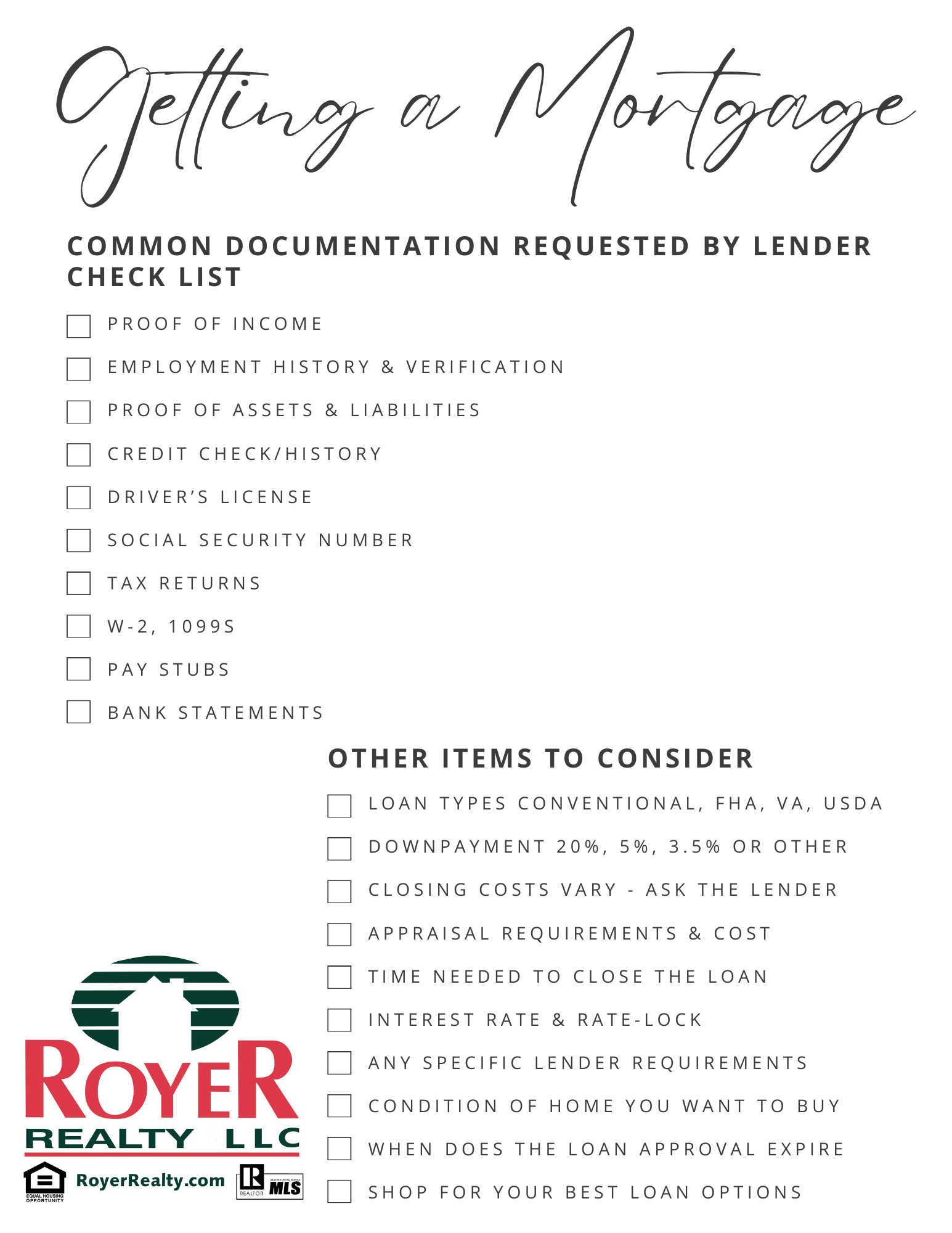
There are many things to consider when obtaining a mortgage. Loan type, interest rate and other terms that apply. A great first step is to contact a local lender and ask questions of their requirements. Shop around for the best combinations of loan options that work best for your situation. Here's a general list of what a lender will ask of you to get you approved for a mortgage along with some other items to consider. If you have any questions, contact one of our REALTORS® and ask some questions to get you started.
How to Get a Mortgage Preapproval Letter Before Buying a Home
Buying a home is an exciting milestone, but before you start touring properties or making offers, one of the most important steps is getting a mortgage preapproval letter.
A mortgage preapproval helps you understand what you may qualify for, gives you a realistic home shopping budget, and shows sellers that you are a serious buyer. In many markets, having a preapproval letter ready can make the difference between having your offer considered and losing out to another buyer.
The good news? Getting preapproved does not have to be complicated. Knowing what lenders look for and preparing your documents ahead of time can make the process much smoother.
What Is a Mortgage Preapproval Letter?
A mortgage preapproval letter is a document from a lender stating that you have been reviewed and are likely eligible for a mortgage loan up to a certain amount.
The lender reviews your financial information, including your income, credit history, debts, employment, and assets, to determine how much they may be willing to lend.
A preapproval is different from a prequalification.
A prequalification is often a quick estimate based on information you provide. It may not involve a full review of your financial documents.
A preapproval usually requires documentation and a lender review, making it a stronger indication that you are ready to purchase.
When you submit an offer, sellers and listing agents typically prefer buyers who are already preapproved because it shows the financing side of the purchase has been seriously reviewed.
Why Should You Get Preapproved Before Looking at Homes?
Many first-time buyers begin by searching online for homes and then contact a lender afterward. While it may seem harmless, this can create problems.
Without a preapproval, you may not know:
-
What price range fits your budget
-
What your monthly payment could look like
-
Which loan programs you qualify for
-
How much money you need upfront
-
Whether there are credit or income issues to address
A preapproval helps you shop with confidence.
It also allows your real estate agent to focus on homes that fit your actual financial goals instead of spending time looking at properties outside your range.
What Information Does a Mortgage Lender Need?
To issue a preapproval letter, lenders review several parts of your financial picture. Every lender may have slightly different requirements, but most will request similar documents.
Proof of Income
Lenders want to verify that you have consistent income available to support your mortgage payment.
Common income documents include:
-
Recent pay stubs
-
W-2 forms
-
Employment history
-
Employer information
-
Recent bank statements
If you are self-employed, own a business, or receive income from other sources, you may need additional documentation.
Self-employed buyers may be asked for:
-
Personal tax returns
-
Business tax returns
-
Profit and loss statements
-
Business bank statements
-
Year-to-date income records
Lenders generally want to understand whether your income is stable and likely to continue.
Tax Records and Tax Returns
Many lenders request tax documentation to verify income, especially for borrowers with complex income situations.
You may need:
-
Federal tax returns (often the last two years)
-
W-2 forms
-
1099 forms
-
Schedules related to business income or rental income
Tax returns help lenders confirm reported income and identify deductions, obligations, or additional sources of funds.
For example, someone who is self-employed may show strong revenue but have taxable income reduced by business expenses. The lender reviews the full picture.
Bank Statements and Assets
Lenders also want to verify that you have funds available for the purchase.
Bank statements may show:
-
Down payment funds
-
Closing cost funds
-
Earnest money availability
-
Cash reserves
You may be asked for:
-
Recent checking account statements
-
Savings account statements
-
Investment account statements
Large deposits may require explanation. Lenders need to confirm where funds came from and whether they are acceptable for the loan.
Credit History and Credit Score
Your credit history plays a major role in mortgage approval.
Lenders review:
-
Credit score
-
Payment history
-
Outstanding debts
-
Credit utilization
-
Existing loans and obligations
Your credit affects:
-
Loan eligibility
-
Interest rate
-
Monthly payment
-
Available loan programs
Before applying, it is usually a good idea to avoid opening new credit accounts, making large purchases, or taking on new debt.
Debt and Monthly Obligations
Lenders calculate your debt-to-income ratio (DTI), which compares your monthly debts to your gross monthly income.
They consider obligations such as:
-
Car payments
-
Student loans
-
Credit card payments
-
Personal loans
-
Child support or other required payments
A lender is not just looking at your income — they are looking at how your income fits with your existing financial responsibilities.
Identification and Personal Information
Expect to provide basic personal information, including:
-
Driver’s license or government-issued ID
-
Social Security number
-
Current address
-
Employment information
This allows the lender to verify your identity and pull your credit report.
What Happens During the Preapproval Process?
The process usually follows these steps:
1. Choose a Lender
You can work with:
-
Banks
-
Credit unions
-
Mortgage companies
-
Mortgage brokers
Many buyers compare options before deciding where to apply.
2. Complete a Loan Application
You will complete a mortgage application with information about:
-
Income
-
Employment
-
Assets
-
Debts
-
Property goals
At this stage, the lender may run a credit check.
3. Submit Documents
The lender reviews your paperwork and may ask follow-up questions.
Do not be surprised if they request clarification. This is a normal part of the process.
4. Receive Your Preapproval Letter
If approved, the lender provides a letter showing your estimated borrowing amount and loan details.
The letter may include:
-
Approved purchase price range
-
Loan amount
-
Loan type
-
Expiration date
-
Conditions that must still be met
How Long Does a Mortgage Preapproval Take?
Many preapprovals can be completed within a few days if your documents are organized and there are no complications.
Some situations may take longer, especially if:
-
Income is difficult to verify
-
You are self-employed
-
Credit issues need review
-
Additional documentation is required
Preparing your paperwork ahead of time can help avoid delays.
How Long Is a Preapproval Letter Good For?
Preapproval letters typically have an expiration date, often within a few months.
If you do not purchase a home during that time, your lender may update your information and issue a new letter.
It is also important to remember that a preapproval is not the final loan approval.
Before closing, the lender will complete the full underwriting process.
Can You Get Preapproved Before You Find a House?
Yes — and most buyers should.
Getting preapproved before shopping helps you:
-
Know your budget
-
Make stronger offers
-
Move faster when you find the right home
-
Avoid surprises later
A lender can also explain loan options such as conventional loans, FHA loans, VA loans, USDA loans, and other programs.
What Should You Avoid After Getting Preapproved?
Once you are preapproved, protect your approval status.
Avoid:
-
Financing a new vehicle
-
Opening new credit cards
-
Making large purchases
-
Changing jobs without discussing it with your lender
-
Moving money without documentation
-
Missing payments
Your financial situation will usually be reviewed again before closing.
Ready to Start Looking for a Home?
A mortgage preapproval is one of the first steps toward a successful home purchase. Having your documents prepared, understanding your budget, and working with experienced professionals can make the process much easier.
At Royer Realty, we help buyers throughout Bellefontaine and surrounding Logan County communities navigate every step of the home buying process — from finding the right property to writing a strong offer.
If you are ready to start your home search, contact Royer Realty at 937-592-7653 or visit www.royerrealty.com today. Our agents are here to help you move forward with confidence.