Area Real Estate News & Market Trends

Welcome to the Royer Realty Blog – your go-to resource for local real estate news, market trends, and home values. Stay ahead of the curve with expert insights on the local housing market, plus tips and advice to help you make informed decisions. Whether you're buying, selling, or simply exploring the area, we’ve got you covered. Reach out to us today, and let’s start the conversation!

May 15, 2024

Home Owner Associations

Owning a property within a home-owners association comes with community rules.  Learn about what the rules are before you buy a home or condo.  Here is some general information about HOA's.  If you are considering buying a home within an HOA or a Condo, ask your REALTOR® for the by-laws, rules and regulations so you can learn about the community before you purchase.


Posted in Resources
April 22, 2024

Guide to Broker Commissions in Real Estate Transactions

From the Ohio REALTORS®, here is a Guide to Broker Commissions in Real Estate Transactions.

If you have any questions, please contact us!


April 17, 2024

Tornado Relief Assistance Available

Tornado Relief Assistance Available!


As you may have seen, Ohio REALTORS® in partnership with our association and several other local boards/associations, has announced that aid is available NOW for individuals affected by the tornadoes that devastated 11 counties in Ohio on March 14, 2024.

PLEASE HELP US GET THE WORD OUT!  SHARE THIS INFORMATION WITH ANYONE WHO MAY NEED ASSISTANCE. 

A little more info...Through a grant from the National Association of REALTORS (NAR), Ohio REALTORS is dispersing $350,000 in financial relief to qualified residents whose homes were damaged in the March 14th tornadoes. This grant will be administered by the Ohio Realtors Charitable Foundation trustees.

Assistance is limited to mortgage assistance, rent assistance, and/or hotel expenses only. Residents must be living in the following counties: Logan, Auglaize, Mercer, Darke, Miami, Union, Delaware, Licking, Hancock, Crawford and Richland.

Individuals interested in contributing to the Realtors Relief Fund can find out more information and donate by visiting rrf.realtor.

To apply for assistance, residents of the affected counties can visit ohiorealtors.org to access the application or contact the MOAR office at 937-335-8501 or moar@moarrealtors.com. 

The application process will continue through Saturday, June 1st.

Attached are some materials that you are welcomed and encouraged to share freely with anyone who may benefit.  This is an outstanding opportunity to help our neighbors and let them know that MOAR cares deeply about our communities. 

April 10, 2024

Logan County Homeowner's Guide

Check out this Logan County Homeowner's Guide that was prepared by the Indian Lake Watershed Project and the Logan Soil and Water Conservation District.  Good information for local homeowners!  

Visit the Logan Soil and Water Conservation website for more information about conservation in Logan County, Ohio.


Posted in Resources
March 15, 2024

Bat Occupation in Ohio Homes: What You Need to Know

If you've discovered bats in your home or building in Ohio, it's important to know how to handle the situation properly. Bats can pose health risks, and in many cases, removing them requires specific expertise to do so safely and humanely. Ohio law also provides guidelines regarding bat removal, as bats are protected species in the state.

To learn more about what is required when bats occupy a building or home in Ohio, we recommend visiting the Ohio Department of Natural Resources (ODNR) website. The ODNR provides valuable information on handling bat infestations, the necessary precautions to take, and the proper methods for safely excluding them from your property.

You can find more detailed guidelines on the ODNR website here: Ohio DNR - Nuisance Bats.

Additionally, it's always a good idea to consult with a wildlife expert or professional pest control service to ensure that the removal is done correctly, in compliance with state laws, and without causing harm to the bats.

Posted in Resources
March 12, 2024

#1 in Bellefontaine 2024

Royer Realty Ranks #1

Posted in Office News
Feb. 16, 2024

How to Get a Mortgage Preapproval Letter: Requirements & Process

There are many things to consider when obtaining a mortgage.  Loan type, interest rate and other terms that apply.  A great first step is to contact a local lender and ask questions of their requirements.  Shop around for the best combinations of loan options that work best for your situation.  Here's a general list of what a lender will ask of you to get you approved for a mortgage along with some other items to consider.  If you have any questions, contact one of our REALTORS® and ask some questions to get you started. 
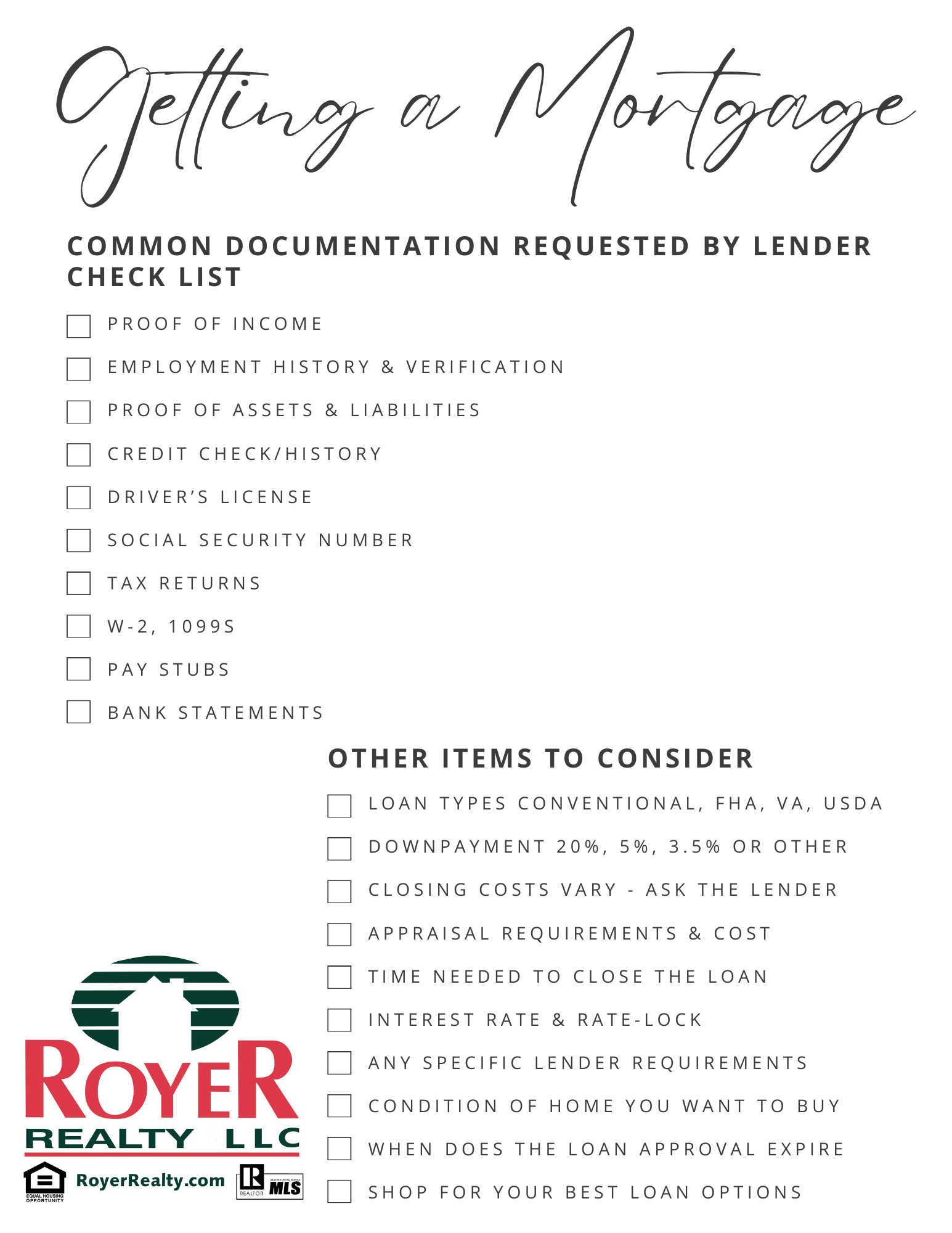


How to Get a Mortgage Preapproval Letter Before Buying a Home

Buying a home is an exciting milestone, but before you start touring properties or making offers, one of the most important steps is getting a mortgage preapproval letter.

A mortgage preapproval helps you understand what you may qualify for, gives you a realistic home shopping budget, and shows sellers that you are a serious buyer. In many markets, having a preapproval letter ready can make the difference between having your offer considered and losing out to another buyer.

The good news? Getting preapproved does not have to be complicated. Knowing what lenders look for and preparing your documents ahead of time can make the process much smoother.

What Is a Mortgage Preapproval Letter?

A mortgage preapproval letter is a document from a lender stating that you have been reviewed and are likely eligible for a mortgage loan up to a certain amount.

The lender reviews your financial information, including your income, credit history, debts, employment, and assets, to determine how much they may be willing to lend.

A preapproval is different from a prequalification.

A prequalification is often a quick estimate based on information you provide. It may not involve a full review of your financial documents.

A preapproval usually requires documentation and a lender review, making it a stronger indication that you are ready to purchase.

When you submit an offer, sellers and listing agents typically prefer buyers who are already preapproved because it shows the financing side of the purchase has been seriously reviewed.


Why Should You Get Preapproved Before Looking at Homes?

Many first-time buyers begin by searching online for homes and then contact a lender afterward. While it may seem harmless, this can create problems.

Without a preapproval, you may not know:

  • What price range fits your budget

  • What your monthly payment could look like

  • Which loan programs you qualify for

  • How much money you need upfront

  • Whether there are credit or income issues to address

A preapproval helps you shop with confidence.

It also allows your real estate agent to focus on homes that fit your actual financial goals instead of spending time looking at properties outside your range.


What Information Does a Mortgage Lender Need?

To issue a preapproval letter, lenders review several parts of your financial picture. Every lender may have slightly different requirements, but most will request similar documents.

Proof of Income

Lenders want to verify that you have consistent income available to support your mortgage payment.

Common income documents include:

  • Recent pay stubs

  • W-2 forms

  • Employment history

  • Employer information

  • Recent bank statements

If you are self-employed, own a business, or receive income from other sources, you may need additional documentation.

Self-employed buyers may be asked for:

  • Personal tax returns

  • Business tax returns

  • Profit and loss statements

  • Business bank statements

  • Year-to-date income records

Lenders generally want to understand whether your income is stable and likely to continue.


Tax Records and Tax Returns

Many lenders request tax documentation to verify income, especially for borrowers with complex income situations.

You may need:

  • Federal tax returns (often the last two years)

  • W-2 forms

  • 1099 forms

  • Schedules related to business income or rental income

Tax returns help lenders confirm reported income and identify deductions, obligations, or additional sources of funds.

For example, someone who is self-employed may show strong revenue but have taxable income reduced by business expenses. The lender reviews the full picture.


Bank Statements and Assets

Lenders also want to verify that you have funds available for the purchase.

Bank statements may show:

  • Down payment funds

  • Closing cost funds

  • Earnest money availability

  • Cash reserves

You may be asked for:

  • Recent checking account statements

  • Savings account statements

  • Investment account statements

Large deposits may require explanation. Lenders need to confirm where funds came from and whether they are acceptable for the loan.


Credit History and Credit Score

Your credit history plays a major role in mortgage approval.

Lenders review:

  • Credit score

  • Payment history

  • Outstanding debts

  • Credit utilization

  • Existing loans and obligations

Your credit affects:

  • Loan eligibility

  • Interest rate

  • Monthly payment

  • Available loan programs

Before applying, it is usually a good idea to avoid opening new credit accounts, making large purchases, or taking on new debt.


Debt and Monthly Obligations

Lenders calculate your debt-to-income ratio (DTI), which compares your monthly debts to your gross monthly income.

They consider obligations such as:

  • Car payments

  • Student loans

  • Credit card payments

  • Personal loans

  • Child support or other required payments

A lender is not just looking at your income — they are looking at how your income fits with your existing financial responsibilities.


Identification and Personal Information

Expect to provide basic personal information, including:

  • Driver’s license or government-issued ID

  • Social Security number

  • Current address

  • Employment information

This allows the lender to verify your identity and pull your credit report.


What Happens During the Preapproval Process?

The process usually follows these steps:

1. Choose a Lender

You can work with:

  • Banks

  • Credit unions

  • Mortgage companies

  • Mortgage brokers

Many buyers compare options before deciding where to apply.

2. Complete a Loan Application

You will complete a mortgage application with information about:

  • Income

  • Employment

  • Assets

  • Debts

  • Property goals

At this stage, the lender may run a credit check.

3. Submit Documents

The lender reviews your paperwork and may ask follow-up questions.

Do not be surprised if they request clarification. This is a normal part of the process.

4. Receive Your Preapproval Letter

If approved, the lender provides a letter showing your estimated borrowing amount and loan details.

The letter may include:

  • Approved purchase price range

  • Loan amount

  • Loan type

  • Expiration date

  • Conditions that must still be met


How Long Does a Mortgage Preapproval Take?

Many preapprovals can be completed within a few days if your documents are organized and there are no complications.

Some situations may take longer, especially if:

  • Income is difficult to verify

  • You are self-employed

  • Credit issues need review

  • Additional documentation is required

Preparing your paperwork ahead of time can help avoid delays.


How Long Is a Preapproval Letter Good For?

Preapproval letters typically have an expiration date, often within a few months.

If you do not purchase a home during that time, your lender may update your information and issue a new letter.

It is also important to remember that a preapproval is not the final loan approval.

Before closing, the lender will complete the full underwriting process.


Can You Get Preapproved Before You Find a House?

Yes — and most buyers should.

Getting preapproved before shopping helps you:

  • Know your budget

  • Make stronger offers

  • Move faster when you find the right home

  • Avoid surprises later

A lender can also explain loan options such as conventional loans, FHA loans, VA loans, USDA loans, and other programs.


What Should You Avoid After Getting Preapproved?

Once you are preapproved, protect your approval status.

Avoid:

  • Financing a new vehicle

  • Opening new credit cards

  • Making large purchases

  • Changing jobs without discussing it with your lender

  • Moving money without documentation

  • Missing payments

Your financial situation will usually be reviewed again before closing.


Ready to Start Looking for a Home?

A mortgage preapproval is one of the first steps toward a successful home purchase. Having your documents prepared, understanding your budget, and working with experienced professionals can make the process much easier.

At Royer Realty, we help buyers throughout Bellefontaine and surrounding Logan County communities navigate every step of the home buying process — from finding the right property to writing a strong offer.

If you are ready to start your home search, contact Royer Realty at 937-592-7653 or visit www.royerrealty.com today. Our agents are here to help you move forward with confidence.


Posted in Buyers, Resources
Jan. 16, 2024

Why You Should Hire a Home Inspector

A home inspection can educate a buyer on the conditions found at a property.  Inspections can provide details about the age of mechanical items (furnace, water heater, roof, etc.).  It is a good idea to have a home inspection done during an inspection period (as defined in your purchase contract) when purchasing a home.  Also, do not delay when scheduling your inspection in case you need time to research something found in the report. 

Buyers should budget for $350-1200 for inspections and the cost varies based on the types of inspections hired to be completed; there is a base fee for the general home inspection and additional costs for add-on inspections like a water sample test, septic inspection, radon inspection, sewer scope, chimney scope or other.  After the inspection, you'll receive a detailed inspection report with photos from your inspector. 

Here's a quick list of the benefits of why you should hire a home inspector and additional information below.


For Your Protection Get a Home Inspection:


The Importance of Hiring a Home Inspector When Buying a Property

When purchasing a home, one of the most important steps in the process is scheduling a home inspection. A home inspection provides valuable insight into the condition of the property, helping buyers make informed decisions about their potential investment. It can reveal the age and condition of major systems, including the furnace, water heater, roof, and plumbing, giving you an accurate understanding of what might need repair or replacement in the near future. Please keep in mind that a home inspector cannot identify every single defect or potential problem, that's nearly an impossible task for anyone (some areas of a property may be inaccessible, not visible or outside the scope of the inspection) - however, inspectors do their best to find out as much about the home as possible during an inspection.

Why You Should Schedule a Home Inspection:

  1. Uncover Hidden Issues: A qualified home inspector can uncover problems that are not visible to the untrained eye, such as electrical issues, foundation problems, or mold growth. Catching these issues early can save you significant repair costs down the road.

  2. Know the Age of Mechanical Systems: A home inspection provides details about the age and condition of critical systems like the furnace, water heater, and roof. Understanding their lifespan can help you plan for upcoming repairs or replacements.

  3. Peace of Mind: Knowing the condition of the home before you finalize the purchase gives you peace of mind. If any major issues are found, you can either negotiate with the seller for repairs or adjust the purchase price accordingly.

  4. Budgeting for Future Expenses: Home inspections help you plan for potential future expenses. Understanding the condition of the home’s systems allows you to budget for repairs and replacements in advance.


What to Expect from Inspection Costs:

The cost of a home inspection typically ranges from $350 to $1,200, depending on the size of the property and the type of inspections needed. A general home inspection will be the base fee, but many buyers opt for additional inspections to ensure thoroughness. Some common add-on inspections include:

  • Radon Test: To check for the presence of radon gas, which can pose health risks.
  • Water Quality Test: To ensure the water supply is safe to drink and use.
  • Sewer Scope Inspection: To inspect the condition of sewer lines and prevent expensive repairs later.
  • Chimney Inspection: To check for any issues with the chimney, especially if the home has a fireplace.

These additional tests may come with extra costs, but they can provide crucial information about the property’s condition. Remember, the home inspector is not an expert on every aspect of a home but a generalist; you may need to seek a second opinion for some items (like having a roofing professional or structural engineer provide more detailed information based on your inspector's findings). 


Additionally, the primary focus of your inspection results when considering what you can negotiate post-inspection with the seller should be aligned with one of the following categories for "Material Defects" (not routine maintenance or cosmetic issues which may be further defined in your purchase contract - ask your REALTOR®): 

  1. Major defects
  2. Things that lead to major defects
  3. Things that hinder your ability to occupy, finance or insure
  4. Safety/health hazards


Conclusion:

A home inspection is an essential step in the home-buying process. By budgeting for the inspection and understanding its benefits, you can avoid costly surprises and make a more informed decision about your new home. Don’t skip this important step—hire a professional inspector to ensure your new property is a sound investment.


Posted in Buyers, Resources
March 22, 2023

Home Renovation Tips

Home Renovation Tips

Here is a link to Realtor.com with more tips!

https://www.realtor.com/advice/home-improvement/


Blog By: Mason Flint

Posted in Resources
Feb. 23, 2023

Local School Districts

Local School Districts

Blog By: Mason Flint

Posted in Resources