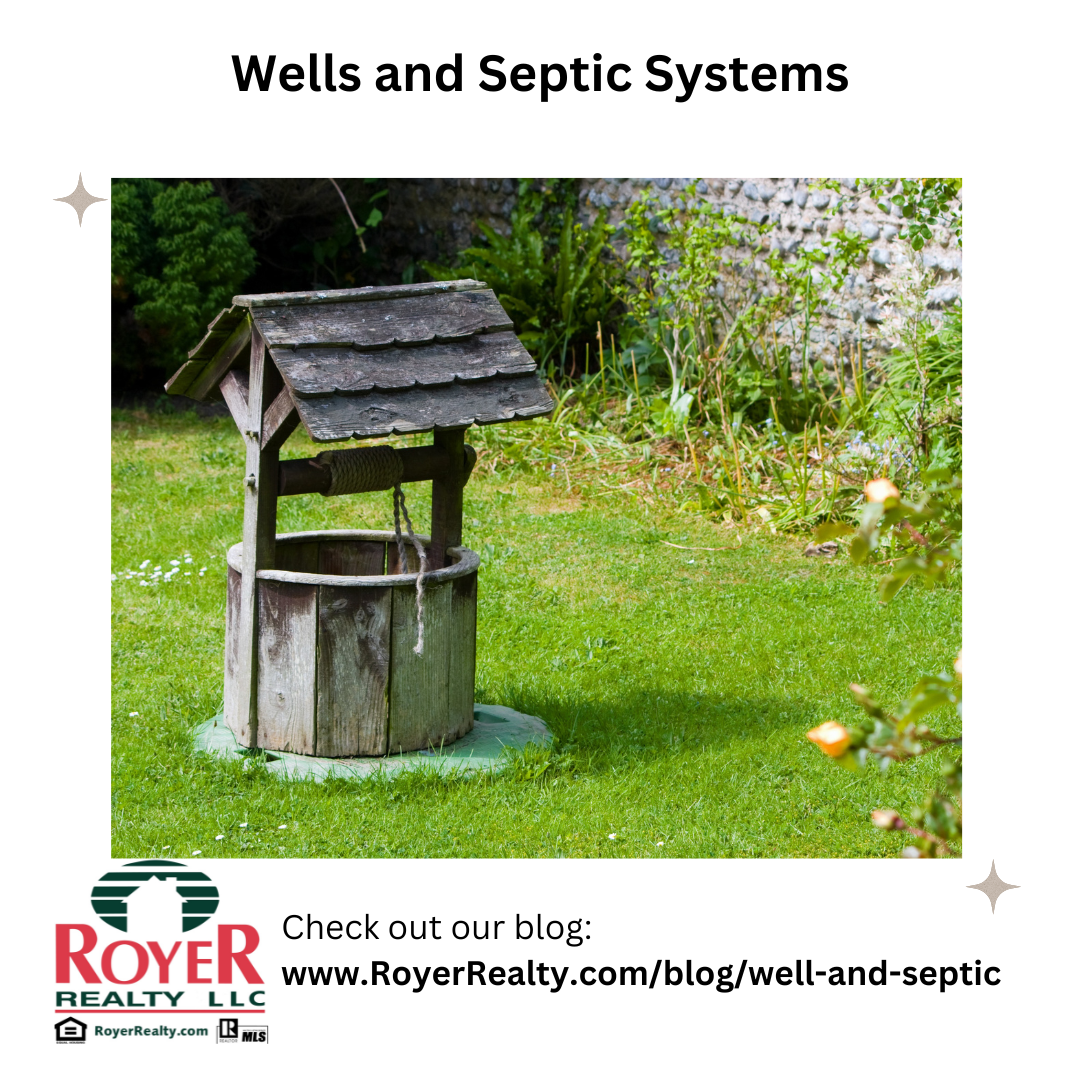
Private Wells and Septic Systems Explained: What Homeowners Need to Know
Thinking about buying a home in Logan County that has a private well or septic system? You’re not alone! Many homes in more rural parts of the county rely on private systems rather than municipal water or sewer. And while that can mean more independence and potentially lower utility bills, it also means more responsibility.
At Royer Realty, we believe that understanding how these systems work—and how to care for them—can give buyers and sellers confidence when navigating a rural property.
Let’s break it down in simple terms.
💧 Private Well vs. Public Water
-
Public Water: Provided and maintained by a city or county. You pay a monthly fee for access to treated water, and the local government handles water quality and system upkeep.
-
Private Well: Your home’s water source comes from underground, accessed via a well drilled on your property. You don’t pay a water bill, but you’re responsible for testing and maintaining the system.
💡 Tip: If buying a home with a well, have the water tested for bacteria during your inspection period.
🚽 Septic System vs. Public Sewer
-
Public Sewer: Wastewater flows from your home into a city-managed sewer line. Simple and low-maintenance, but comes with a monthly sewer charge.
-
Septic System: Your home has its own underground waste management system. It includes a septic tank (to separate solids and liquids) and a drain field (where liquid waste is filtered back into the ground).
💡 Tip: A septic inspection and tank pumping are smart steps before closing on a home with a septic system. (Sewer lines can be inspected by a camera scope.)
🛠️ How a Septic System Works
-
Wastewater leaves the home and enters a buried septic tank.
-
Solids settle to the bottom, forming “sludge,” while grease floats to the top as “scum.”
-
The liquid in the middle flows out into the drain field.
-
The drain field naturally filters the water before it re-enters the groundwater supply.
🧰 How to Maintain a Well and Septic System
Keeping your system running smoothly isn’t difficult—but it does require a little attention:
✅ Well Maintenance:
-
Test your water annually for bacteria.
-
Keep the area around the well clean and accessible.
-
Avoid using harsh chemicals near your well.
✅ Septic Maintenance:
-
Pump your septic tank every 3–5 years.
-
Avoid flushing wipes, feminine products, grease, or chemicals.
-
Don’t plant trees or build structures over your drain field.
🏡 Considering a Home with a Well or Septic System?
Many Logan County homes offer the charm of rural living—and that often comes with private systems. At Royer Realty, we help buyers understand what to expect, coordinate inspections, and make confident choices.
📞 Call us today at (937) 592-7653
🌐 Or explore available homes at www.royerrealty.com
Whether you’re dreaming of wide-open spaces or just want fewer utility bills, we’ll help you find the perfect home—septic tank and all!
Additional information about wells and septic systems can be found at the Logan County Health District: https://www.loganhealthohio.gov/