Area Real Estate News & Market Trends

Welcome to the Royer Realty Blog – your go-to resource for local real estate news, market trends, and home values. Stay ahead of the curve with expert insights on the local housing market, plus tips and advice to help you make informed decisions. Whether you're buying, selling, or simply exploring the area, we’ve got you covered. Reach out to us today, and let’s start the conversation!

Aug. 19, 2025

Buying a Manufactured Home on Leased Land: Understanding Your Financing Options

Manufactured home with title on leased land in a mobile home park, illustrating chattel loan financing options for non-real property housing.


How to Finance a Manufactured Home on Leased Land: What Buyers Should Know

Buying a manufactured home can involve different financing considerations than buying a traditional site-built home. This is especially true when the manufactured home is not converted to real property and is located on leased land.

Before getting into the details, there is one important point to make clear:

Royer Realty does not and has never provided financing for manufactured or mobile homes. Royer Realty is a real estate brokerage, not a lender. We do not originate, arrange, broker, approve, or service loans of any kind.

This article is provided for general informational purposes only. It is intended to help consumers understand some financing considerations they may encounter when purchasing a manufactured home. Financing availability and requirements are determined by individual lenders. Buyers should contact licensed lenders directly to discuss their specific circumstances and available loan programs.

Why Financing Can Be Different

When a manufactured home is located on land owned by someone else, the home may be classified as personal property rather than real property. In that situation, the home may have a title rather than being included in a deed to the land.

That distinction can affect which types of financing are available.

Traditional mortgage financing is generally designed for real estate, including a home and the land on which it is permanently situated. A manufactured home that is personal property and located on leased land may not qualify for a traditional mortgage.

Instead, some buyers may need to investigate chattel loans, which are loans specifically designed to finance personal property.

The type of financing available depends on the individual property, the buyer's financial circumstances, and the lender's requirements.

What Is a Chattel Loan?

A chattel loan is a type of financing used for personal property. In the manufactured-home market, chattel financing may be used when the home is not part of the real estate and is located on leased land.

Because these loans are different from traditional mortgages, the terms can also be different.

Depending on the lender and the circumstances, buyers may encounter:

  • Different interest rates than traditional mortgage financing

  • Different down-payment requirements

  • Shorter repayment periods

  • Different credit and income requirements

  • Different insurance requirements

  • Restrictions based on the age, condition, or type of manufactured home

These terms are not universal. A lender must evaluate the specific buyer and property to determine what financing may be available.

What Buyers Should Consider Before Purchasing

If you are considering purchasing a manufactured home on leased land in Ohio, financing is only one part of the overall cost of ownership.

Buyers should also consider:

  • Monthly lot rent in addition to the loan payment

  • Community rules and restrictions

  • Whether the home is classified as real or personal property

  • The age and condition of the manufactured home

  • Insurance requirements

  • Resale considerations

  • The length of the proposed loan

  • Total monthly housing costs

  • Whether the lease terms affect financing or resale

It is important to understand these factors before committing to a purchase.

Not Every Lender Finances Manufactured Homes

One of the challenges with manufactured-home financing is that not every lender offers every type of manufactured-home loan.

A buyer may need to contact a lender that specifically handles manufactured homes or personal-property financing. Possible sources may include:

  • Banks that offer manufactured-home financing

  • Credit unions

  • Specialty lenders

  • Lenders that specifically handle chattel loans

  • Other licensed lending institutions with manufactured-home loan programs

Availability varies by lender and location.

Royer Realty does not provide, arrange, or recommend financing. If you are considering a manufactured home, you should contact lenders directly to determine whether financing is available for the specific home you are considering.

Ask the Lender About the Specific Home

Manufactured-home financing can depend on details about the property itself.

Before making an offer or committing to a purchase, buyers may want to ask a lender:

  • Does this lender finance manufactured homes?

  • Does the lender finance homes located on leased land?

  • Would the home be financed as real property or personal property?

  • What type of loan would apply?

  • What down payment would be required?

  • What loan terms are available?

  • What interest rate and fees would apply?

  • Are there age or condition restrictions on the home?

  • Are there requirements regarding the manufactured-home community or land lease?

  • What documentation will be needed?

The answers can vary significantly from one lender to another.

Get Financing Information Early

If financing will be necessary for your purchase, it is generally a good idea to speak with a lender before selecting a home.

A lender can evaluate your income, credit, assets, and other financial information and explain what loan programs may be available to you.

For a manufactured home on leased land, it is particularly important to confirm that the specific type of home and ownership arrangement qualifies for the financing you are considering.

A general mortgage pre-approval does not necessarily mean that every manufactured home will qualify for that loan.

Royer Realty's Role

Royer Realty is a real estate brokerage serving Ohio. Our agents assist buyers and sellers with real estate transactions, including helping consumers understand properties, purchase processes, contracts, and local market conditions.

Royer Realty is not a lender.

We do not:

  • Provide manufactured-home financing

  • Provide mobile-home financing

  • Originate loans

  • Approve loans

  • Arrange financing

  • Broker loans

  • Service loans

  • Determine whether a buyer qualifies for financing

We have never provided financing for manufactured or mobile homes.

Financing decisions are made by licensed lenders, and consumers should work directly with lenders regarding loan eligibility, terms, rates, down payments, and other financing questions.

Royer Realty also does not operate as a real estate brokerage outside Ohio.

Final Thoughts

Financing a manufactured home on leased land can be different from financing a traditional home and may require buyers to explore loan programs specifically designed for manufactured homes or personal property.

The best place to start is with a licensed lender that handles the type of manufactured-home financing you need. Ask questions about the specific home, the land arrangement, loan terms, down payment, interest rate, and total cost before moving forward.

This article is general educational information only. It is not a financing offer, loan recommendation, or lending service provided by Royer Realty.

If you are looking at a manufactured home in Ohio, Royer Realty can assist you with the real estate side of the transaction. For financing questions, contact a licensed lender directly.


📞 Call us today at 937-592-7653 or visit www.royerrealty.com to speak with a local expert who truly understands the manufactured housing market. Whether you’re buying your first home or your next one, we’re here to help make it happen.


 

Posted in Buyers, Resources, Sellers
Aug. 14, 2025

Understanding Dual Agency in Real Estate | Royer Realty

blog header image what is dual agency


What is Dual Agency?  Great question—and one that many buyers and sellers ask!

When a REALTOR® is involved in dual agency, it means they are representing both the buyer and the seller in the same transaction. While this may sound like a conflict of interest at first, dual agency is legal in Ohio (and many other states) as long as both parties are fully informed and give written consent.

Here’s how a REALTOR® can still provide fair, ethical, and professional service to both parties in a dual agency situation:


🏡 What Dual Agency Does and Doesn’t Mean

  • ✅ The agent must remain neutral and treat both parties honestly and fairly.

  • ✅ The agent can help facilitate the transaction, share property information, explain documents, and guide the process.

  • ❌ The agent cannot advocate for one side over the other.

  • ❌ The agent cannot disclose confidential information (like your bottom line or motivation) to the other party without your permission.


⚖️ Fair Treatment in Practice

Here’s what fair treatment looks like from a REALTOR® in dual agency:

  1. Equal Access to Information: Both buyer and seller receive the same factual information about the property and market.

  2. No Preferential Treatment: The agent cannot give one party a negotiation edge or share the other’s strategy.

  3. Clear Communication: All paperwork and offers are communicated promptly and accurately to both sides.

  4. Honest Answers to Questions: While the agent can’t offer advice that favors one side, they can still explain terms, processes, and timelines.


💡 How Dual Agency Is Disclosed

In Ohio, dual agency must be disclosed in writing using the State of Ohio’s Agency Disclosure Statement. This ensures:

  • Everyone knows what kind of representation they’re receiving

  • There are no surprises during the process

  • Both parties are given the opportunity to ask questions or seek outside representation if they choose


👥 Is Dual Agency Right for You?

It depends! Some buyers and sellers are perfectly comfortable working with a single, neutral REALTOR®, especially in smaller communities where one agent may have strong knowledge of both the home and the market. Others may prefer to have separate agents for more personalized representation.

Either way, transparency and communication are key—and at Royer Realty, we’re committed to both.


🤝 Have Questions About Dual Agency?

We’re happy to walk you through the pros and cons based on your situation—and always make sure you understand your rights.

📞 Call us today at (937) 592-7653
🌐 Or visit www.royerrealty.com

Whether you’re buying, selling, or doing both—we’ll guide you with honesty, experience, and care every step of the way.


Posted in Buyers, Resources, Sellers
Aug. 4, 2025

Why You Don’t Have to Call the Listing Agent: Know Your Options as a Homebuyer

blog header image call your agent


🏡 Why You Don’t Have to Call the Listing Agent (And Why You Shouldn’t if You Have an Agent You Trust)

You’ve spotted your dream home online and your first instinct might be to call the name on the sign or the listing site. But here’s the thing: you don’t have to call the listing agent—and if you already have a REALTOR® you trust, you shouldn’t.

At Royer Realty, we’re all about helping buyers make informed, empowered decisions. Let’s unpack why using your own buyer’s agent is not only perfectly okay—it’s often the best way to protect your interests.


👥 The Role of a Buyer’s Agent vs. a Listing Agent

  • Listing Agent: Represents the seller. Their job is to get the best deal for the seller—not you.

  • Buyer’s Agent: Represents you, the buyer. Their role is to advocate for your best interests every step of the way.

That includes helping you:

  • Navigate showings

  • Write strong offers

  • Negotiate price and repairs

  • Understand contracts

  • Coordinate inspections and closings

👉 If you call the listing agent directly, they can’t represent both you and the seller without full disclosure and agreement from both parties—and even then, your needs may not be fully prioritized.

  • When a REALTOR® is involved in dual agency, it means they are representing both the buyer and the seller in the same transaction. While this may sound like a conflict of interest at first, dual agency is legal in Ohio (and many other states) as long as both parties are fully informed and give written consent. The dual agent must remain neutral and treat both parties honestly and fairly.

🤝 The Benefits of Working with a Preferred Agent (Especially One You Know)

Whether your preferred agent is a family friend, a trusted REALTOR® you've worked with before, or someone referred to you, choosing someone you already know and trust makes all the difference.

Benefits include:

  • Consistent communication

  • Personalized advice based on your needs

  • A relationship built on trust, not just transaction

  • Less pressure, more guidance

🏡 Buying a home is a big deal—work with someone who puts your goals first.


⚖️ Legal & Ethical Considerations

Real estate professionals are bound by strict ethical guidelines and state laws. If you're already working with an agent and contact the listing agent directly, it can create confusion—or even accidentally jeopardize your representation agreement.

The best move? Let your agent reach out on your behalf. They’ll schedule showings, get you accurate information, and handle negotiations professionally. That’s what they’re there for!


❌ Common Misconceptions About Calling the Listing Agent

  1. "I’ll get a better deal if I go straight to the listing agent."

    • Not true. The listing agent works for the seller, and any “deal” will favor the seller’s terms—not yours.

  2. "I have to call them to schedule a showing."

    • Your agent can schedule any showing, even if it’s not their listing.

  3. "I don’t want to bother my agent with this one house."

    • Trust us—they’d much rather hear from you than find out you called another agent!


📞 Let Royer Realty Represent You

Whether you’re working with one of our experienced REALTORS® already or just starting your home search, we’re here to advocate for your best interests. Don’t feel pressured to call the name on the sign—call the team that puts you first.

📲 Call Royer Realty today at (937) 592-7653
🌐 Or explore available homes with your preferred agent at www.royerrealty.com

Your home, your agent, your terms. Let’s make your real estate experience smooth, smart, and stress-free.


Let me know if you'd like this turned into a shareable social post, infographic, or downloadable buyer tip sheet!


Posted in Buyers, Resources
July 30, 2025

What to Expect During a Septic Inspection | Royer Realty Logan County

blog image header septic-inspection

What Happens During a Septic Inspection?

If you’re buying (or selling) a home with a septic system, a septic inspection is a smart and often necessary step in the process. Even if the system seems to be working fine, hidden issues can lead to expensive repairs down the line—and most of them can be caught early with a proper inspection.

Here’s what’s typically involved in a standard septic inspection, especially the type most common in Logan County and surrounding rural areas.


💡 1. The Dye Test (Common for Basic Inspections)

A dye test is a simple, non-invasive way to check if the septic system is accepting and filtering wastewater properly. Here’s how it works:

  • A non-toxic fluorescent dye is flushed down a toilet or run through a sink inside the home.

  • The inspector then runs water through the system for 20–30 minutes to simulate typical household use.

  • Afterward, they’ll look in the yard and around the drain field to check if any dyed water is surfacing—if it is, it may indicate a problem like a blockage, backup, or saturated system.

👉 A dye test won't reveal everything, but it’s a good first step for identifying surface-level issues.


👀 2. Visual Inspection of the Septic Tank

If access is available, the inspector will remove the septic tank lid to look inside. During this check, they’ll look for:

  • Sludge and scum levels to see if the tank is due for pumping.

  • Water level to determine whether the system is draining correctly.

  • Any signs of structural damage, corrosion, or backflow.


🔧 3. Checking the Baffles

Inside the tank, there are typically two baffles—one at the inlet (where waste enters the tank) and one at the outlet (where liquid flows to the drain field).

  • Baffles help keep solids from entering the drain field, which can clog the system.

  • The inspector will check that the baffles are intact and functioning properly—cracks or missing baffles can lead to system failure over time.


🔁 4. Locating and Inspecting the Distribution Box (D-Box)

Not always inspected during a basic check, but highly recommended:

  • The distribution box connects the septic tank to the drain field.

  • It evenly distributes wastewater into multiple drain lines in the field.

  • A clogged or off-level D-box can lead to overuse of one part of the drain field—causing backups or saturation.

If accessible, the inspector will open the box, check for water flow, balance, and any signs of wear, cracks, or blockages.


🛠️ Why a Full Inspection Matters

A septic system can last 25–40 years or longer if properly maintained. But even a small issue left unnoticed can cause big headaches (and big repair bills). A full inspection helps ensure:

  • The system is safe and functional

  • You’re not inheriting expensive repairs as a buyer

  • Your home is ready for the next owner if you’re selling


Need Help Scheduling a Septic Inspection?

At Royer Realty, we work with experienced local inspectors and can help you coordinate a septic check as part of your home buying or selling process. Whether you’re new to private systems or just want peace of mind, we’ll guide you every step of the way.

📞 Call us today at (937) 592-7653
🌐 Or learn more at www.royerrealty.com

We’re here to make sure nothing gets buried in the fine print—especially not your septic system!


Posted in Resources
July 24, 2025

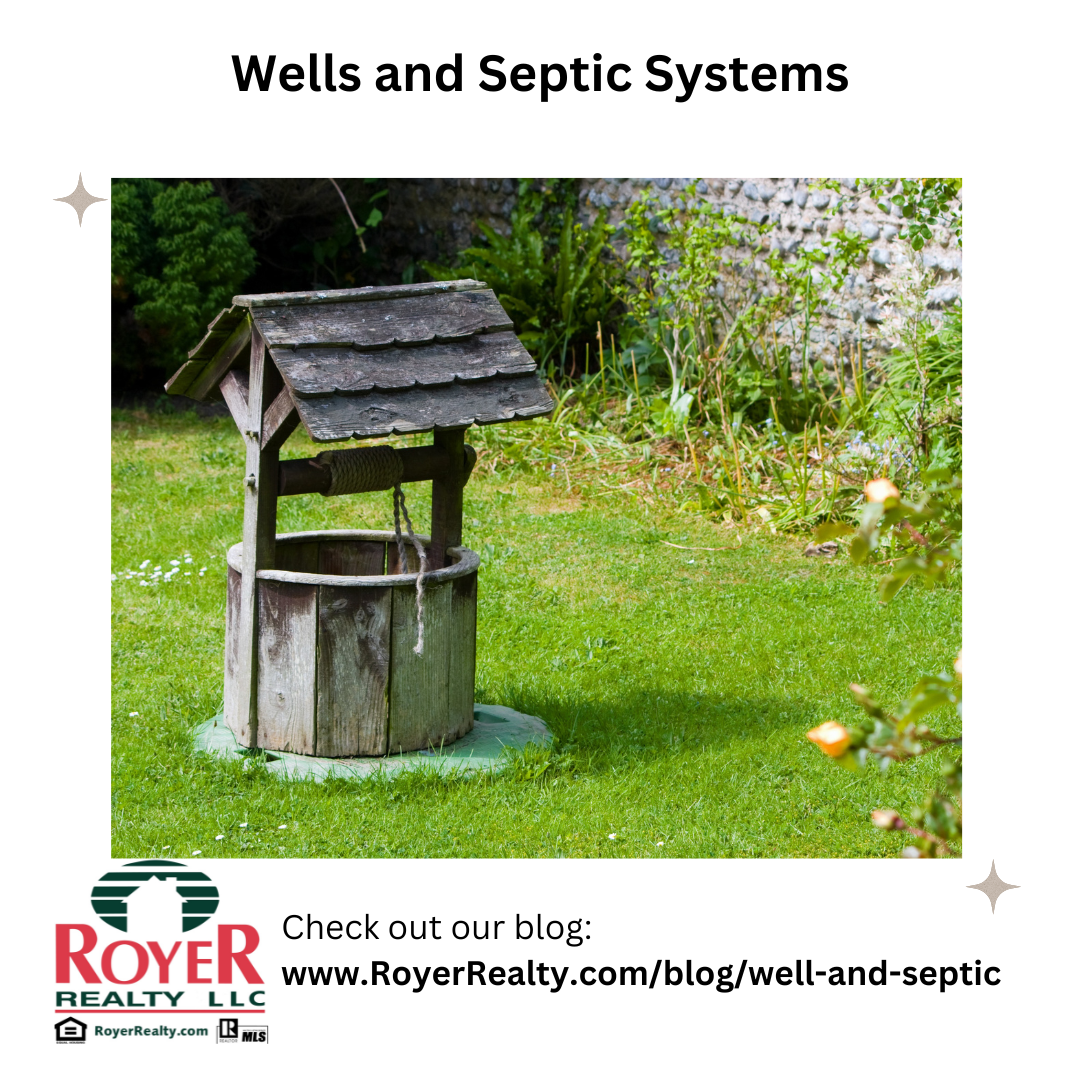
Private Wells and Septic Systems Explained: What Homeowners Need to Know

blog header image well and septic systems


Private Wells and Septic Systems Explained: What Homeowners Need to Know

Thinking about buying a home in Logan County that has a private well or septic system? You’re not alone! Many homes in more rural parts of the county rely on private systems rather than municipal water or sewer. And while that can mean more independence and potentially lower utility bills, it also means more responsibility.

At Royer Realty, we believe that understanding how these systems work—and how to care for them—can give buyers and sellers confidence when navigating a rural property.

Let’s break it down in simple terms.


💧 Private Well vs. Public Water

  • Public Water: Provided and maintained by a city or county. You pay a monthly fee for access to treated water, and the local government handles water quality and system upkeep.

  • Private Well: Your home’s water source comes from underground, accessed via a well drilled on your property. You don’t pay a water bill, but you’re responsible for testing and maintaining the system.

💡 Tip: If buying a home with a well, have the water tested for bacteria during your inspection period.


🚽 Septic System vs. Public Sewer

  • Public Sewer: Wastewater flows from your home into a city-managed sewer line. Simple and low-maintenance, but comes with a monthly sewer charge.

  • Septic System: Your home has its own underground waste management system. It includes a septic tank (to separate solids and liquids) and a drain field (where liquid waste is filtered back into the ground).

💡 Tip: A septic inspection and tank pumping are smart steps before closing on a home with a septic system. (Sewer lines can be inspected by a camera scope.)


🛠️ How a Septic System Works

  1. Wastewater leaves the home and enters a buried septic tank.

  2. Solids settle to the bottom, forming “sludge,” while grease floats to the top as “scum.”

  3. The liquid in the middle flows out into the drain field.

  4. The drain field naturally filters the water before it re-enters the groundwater supply.


🧰 How to Maintain a Well and Septic System

Keeping your system running smoothly isn’t difficult—but it does require a little attention:

✅ Well Maintenance:

  • Test your water annually for bacteria.

  • Keep the area around the well clean and accessible.

  • Avoid using harsh chemicals near your well.

✅ Septic Maintenance:

  • Pump your septic tank every 3–5 years.

  • Avoid flushing wipes, feminine products, grease, or chemicals.

  • Don’t plant trees or build structures over your drain field.


🏡 Considering a Home with a Well or Septic System?

Many Logan County homes offer the charm of rural living—and that often comes with private systems. At Royer Realty, we help buyers understand what to expect, coordinate inspections, and make confident choices.

📞 Call us today at (937) 592-7653
🌐 Or explore available homes at www.royerrealty.com

Whether you’re dreaming of wide-open spaces or just want fewer utility bills, we’ll help you find the perfect home—septic tank and all!


Additional information about wells and septic systems can be found at the Logan County Health District: https://www.loganhealthohio.gov/

Posted in Resources
July 16, 2025

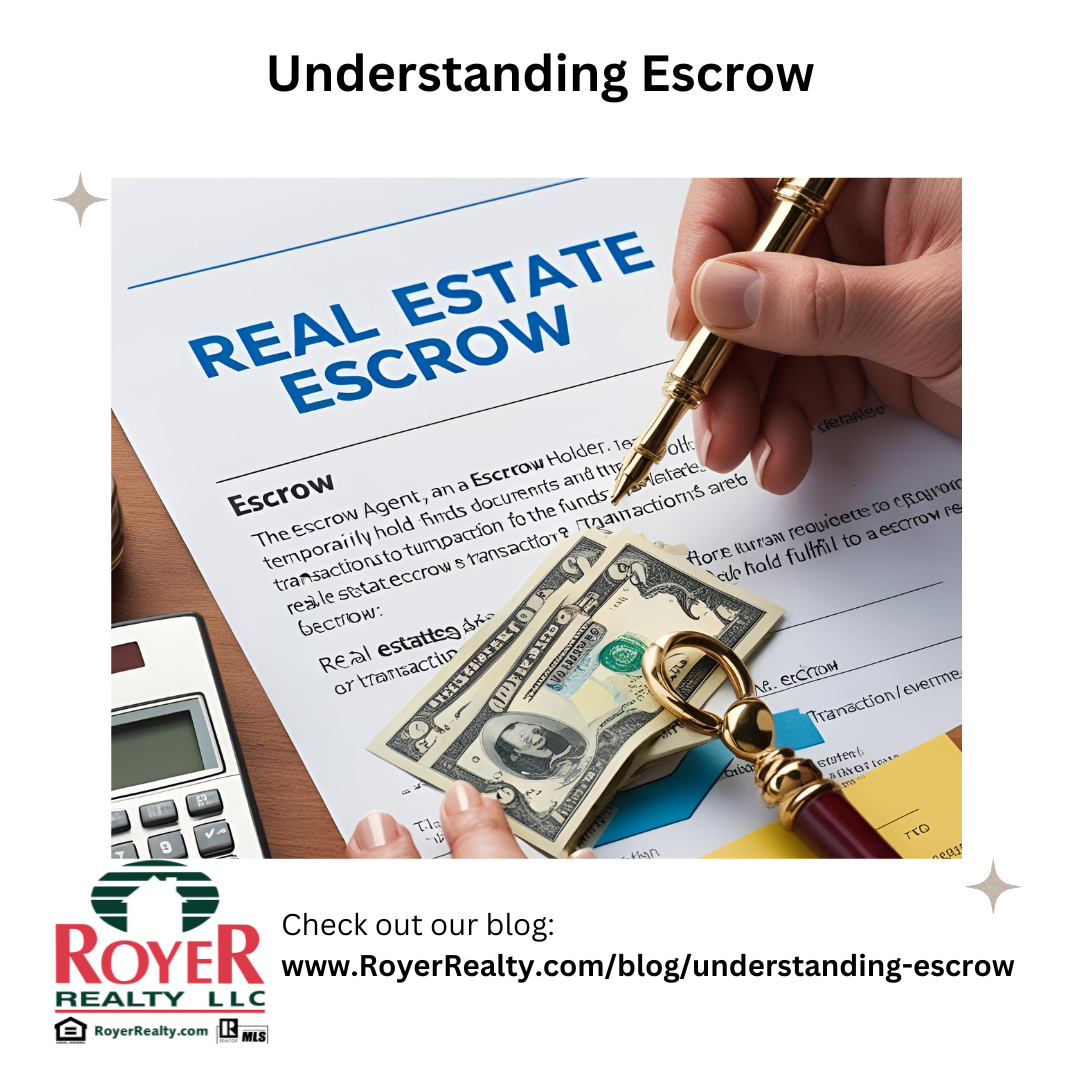
Understanding Escrow: The Real Estate Holding Tank Explained

blog header image understanding escrow

Understanding Escrow: The Real Estate Holding Tank Explained

If you’re buying or selling a home, you’ve probably heard the word "escrow" tossed around—but what does it actually mean? Is it a bank account? A company? A step in the process?

At Royer Realty, we believe you shouldn’t have to feel like you need a law degree to understand your real estate transaction. So let’s take a quick, clear look at what escrow really is—and why it’s a crucial part of closing the deal.


💡 So, What Is Escrow?

Real estate escrow is a legal process in which a third party, known as an escrow agent or escrow holder, temporarily holds funds and documents while a real estate transaction is underway. Think of it like a holding tank that protects both the buyer and seller until all the terms of the deal are met.  This process ensures that all parties involved in the transaction fulfill their obligations before the deal is finalized. Here's a breakdown:


  1. Escrow Agent: The escrow agent is a neutral third party who facilitates the transaction. This can be a title company, a lawyer, or an escrow company.
  2. Escrow Account: The buyer deposits the purchase funds into an escrow account. The seller deposits the deed or title to the property into the escrow account.
  3. Conditions: The escrow agent ensures that all conditions of the sale are met. This includes verifying that the buyer has secured financing, that the property has been inspected, and that any necessary repairs have been made.
  4. Closing: Once all conditions are satisfied, the escrow agent distributes the funds to the seller and records the deed or title with the appropriate government agency, transferring ownership to the buyer.
  5. Protection: Escrow protects both the buyer and the seller by ensuring that the transaction is completed only when all terms and conditions are met. It helps to prevent fraud and ensures that both parties adhere to the agreed-upon terms.


🔁 How Escrow Works

Here’s a simplified snapshot of the escrow process:

  1. Offer Accepted: Buyer and seller agree on terms.

  2. Escrow Opens: Buyer deposits earnest money.

  3. Due Diligence Period: Inspections, appraisals, financing, etc.

  4. All Conditions Met: Escrow receives final documents and loan funds.

  5. Closing Day: Escrow disburses funds, title transfers, keys change hands!

The escrow agent’s job is to make sure everything is fair, accurate, and on time.


🛡️ Why Escrow Matters

Escrow is there to protect everyone involved:

  • Buyers are protected from handing over money before receiving a clear title.

  • Sellers are protected from transferring ownership before being paid.

  • Lenders are protected from releasing loan funds before all requirements are met.

It’s a safeguard that makes sure no one walks away empty-handed—or stuck with surprises.


✅ You Don’t Have to Navigate Escrow Alone

While escrow can sound a little technical, you don’t have to figure it out on your own. At Royer Realty, we walk you through each step with clear communication, helpful checklists, and local professionals we know and trust. Whether you’re buying your first home or selling your third, we’ll help make sure nothing falls through the cracks.

📞 Have questions about escrow or the home buying process? Give us a call at (937) 592-7653
🌐 Or visit us anytime at www.royerrealty.com

We’re here to make your real estate experience as smooth—and stress-free—as possible.


Posted in Buyers, Resources, Sellers
July 9, 2025

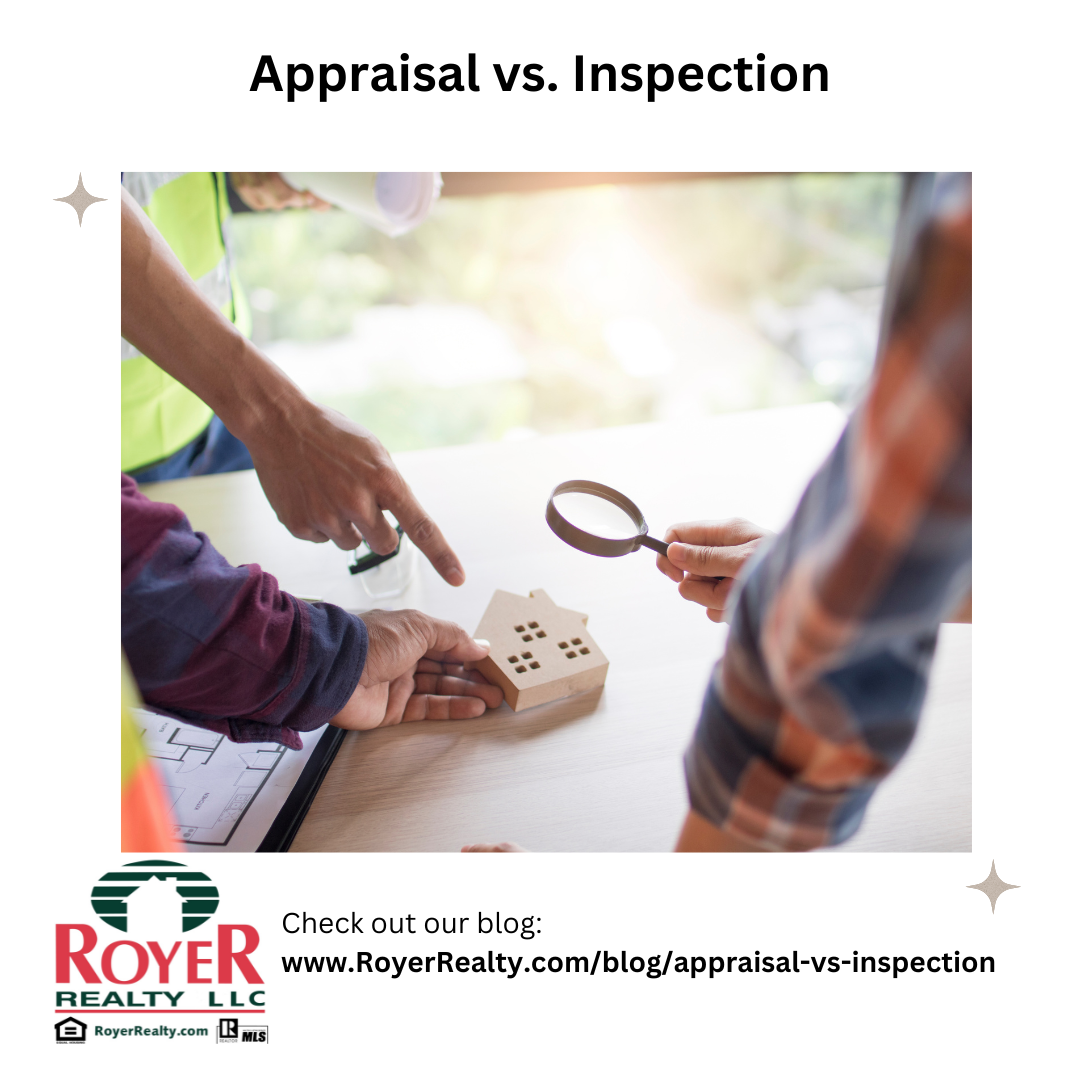
Appraisal vs. Inspection: What’s the Difference, and Why Do You Need Both?

blog image header appraisal vs inspection


Appraisal vs. Inspection: What’s the Difference, and Why Do You Need Both?

If you’re buying or selling a home, you’ve probably heard both terms: appraisal and inspection. While they might sound similar (and they often happen around the same time in a real estate transaction), they serve very different purposes—and both are crucial to a successful deal.

At Royer Realty, we love clearing up confusion and giving our clients confidence throughout the process. So, let’s break it down!


🔍 What Is an Appraisal?

An appraisal is all about determining the fair market value of a home. It’s usually required by the lender to make sure the home is worth the amount being borrowed. A licensed appraiser compares the property to similar recently sold homes in the area, taking into account:

  • Size and condition of the home

  • Location and neighborhood

  • Recent upgrades or renovations

  • Comparable sales (“comps”) nearby

💡 Why it matters: The appraisal protects both the lender and the buyer by ensuring the home isn’t overpriced.


🛠️ What Is a Home Inspection?

A home inspection, on the other hand, focuses on the condition of the home—not its value. It’s a thorough, top-to-bottom review of the property’s systems and structure, typically including:

  • Roof, foundation, and siding

  • Electrical and plumbing systems

  • HVAC (heating/cooling)

  • Appliances, windows, and doors

💡 Why it matters: Inspections help buyers understand what they’re getting into—and give sellers a chance to make repairs before listing or closing.


🏡 Why You Need Both

Think of it this way:

  • The appraisal tells you what the home is worth.

  • The inspection tells you what condition it’s in.

Skipping either could leave you overpaying for a home with costly repairs. That’s why having both is the smart move.


🤝 Work With a Team That Guides You Every Step of the Way

At Royer Realty, we walk our buyers and sellers through every phase of the transaction—from pre-approval to appraisal and inspection day. Whether you're trying to understand the process or need help negotiating repairs, we've got your back with local experience and professional insight.

📞 Call Royer Realty at (937) 592-7653
🌐 Or start your journey online at www.royerrealty.com

Let’s make your real estate experience smooth, smart, and stress-free—just the way it should be.


Would you like a printable version, social media teaser, or newsletter version of this blog post next?


Posted in Buyers, Resources, Sellers
July 4, 2025

Pet-Friendly Home Buying in Logan County: What to Look For

blog image header pet-friendly home buying


🐾 Pet-Friendly Home Buying in Logan County: What to Look For

If your pet is part of the family (and let’s be honest—most of us treat them like royalty), then finding a home that suits everyone’s needs is a top priority. Whether you're a proud dog parent, cat lover, or have other furry companions, buying a home in Logan County that checks all the “pet-friendly” boxes can make a big difference in your everyday life.

At Royer Realty, we understand that your pets aren’t just along for the ride—they’re part of the journey. Here’s what to keep in mind when shopping for the perfect home for you and your four-legged family members.


🏡 1. Fenced Yards & Outdoor Spaces

A securely fenced backyard is often at the top of every pet owner’s list. It gives your pup room to run and play while giving you peace of mind. Bonus points for shade trees, privacy fencing, or a covered patio where pets can lounge safely outside.


🚪 2. Pet-Friendly Flooring

Let’s face it—accidents happen, and muddy paws are real. Homes with durable flooring like laminate, tile, or luxury vinyl are ideal for pet households. They're easier to clean, scratch-resistant, and better for long-term maintenance.


🚶 3. Nearby Parks and Trails

Logan County offers a great selection of green spaces, and many buyers are on the hunt for homes with easy access to walking trails, dog parks, or nearby open land. These features not only improve your lifestyle, but they also add resale value for future pet-loving buyers.


🚗 4. Pet-Friendly Communities and HOA Rules

Some neighborhoods and condos have pet restrictions—whether it's breed limits, weight limits, or how many pets are allowed. Be sure to review any HOA rules with your REALTOR® before falling in love with a place.


📦 5. Smooth Transitions for Pets During a Move

Summer is a busy moving season, and transitions can be stressful for animals. Having a REALTOR® who’s sensitive to your needs (and your pet’s!) can make the process smoother. We’ve even had clients schedule showings around their dog’s nap schedule—and we totally get it.


🐶 We Get It—Pets Are Family

At Royer Realty, we go beyond square footage and bedroom counts. We take the time to understand your lifestyle—whether that includes a backyard for a retriever, sunny windows for a cat, or a quiet spot for your senior pup to relax.

If you’re thinking about buying a pet-friendly home in Logan County or surrounding areas, let us help you find the perfect place that works for your whole family.

📞 Call us at (937) 592-7653
🌐 Or start your search at www.royerrealty.com

Let’s find your dream home—tail wags included. 🐾


Posted in Buyers
June 30, 2025

AI in Real Estate: How Technology Is Changing the Way We Buy and Sell Homes

AI in Real Estate: How Technology Is Changing the Way We Buy and Sell Homes

When you think of artificial intelligence (AI), real estate might not be the first industry that comes to mind. But make no mistake—AI is quickly becoming one of the most powerful tools in the home buying and selling process. From helping clients find the perfect home faster to improving the way REALTORS® communicate and close deals, technology is changing the game.

At Royer Realty, we’re not just keeping up—we’re leaning in.


🔍 Smarter Searches for Buyers

Gone are the days of endlessly scrolling through listings. With AI-powered search tools, buyers can now receive hyper-personalized home recommendations based on lifestyle preferences, location habits, budget, and even desired features like walk-in closets or fenced yards.

We’re using these insights to help match buyers with the right homes more efficiently—and to streamline the process so you're not wasting time on listings that don’t make sense.


🧠 Predictive Analytics for Sellers

Sellers are benefiting too. AI can analyze local market trends, pricing history, buyer behaviors, and neighborhood stats to help us price your home more accurately and predict market shifts.

At Royer Realty, we’re using these tools to offer better strategy sessions for our sellers—giving you an edge whether you’re listing in a hot market or navigating a quieter season.


💬 Better, Faster Communication

Have you noticed how quick our follow-ups are? AI helps us manage conversations, schedule showings, and even flag questions that need a personal touch. That means you’ll always get a timely response, and we can stay focused on helping you through each step with a human touch.


🏡 Real Estate Will Always Be Personal

Technology is an incredible tool, but it’s no replacement for local expertise, honest advice, and face-to-face guidance. At Royer Realty, we believe the best results come when AI supports REALTORS®, not replaces them.


Ready to Experience a Smarter Way to Buy or Sell?

Whether you're curious about new tech tools or ready to start your real estate journey, the team at Royer Realty is here to help you make the most of every opportunity. With over 35 years serving Logan County and beyond, we combine cutting-edge technology with trusted, personal service you can count on.

📞 Call us at (937) 592-7653
🌐 Or visit us online at www.royerrealty.com

Let’s find the smarter, faster, and better way to your next home—together.

Posted in Marketing, Office News
June 24, 2025

Top 10 Reasons to Use a REALTOR® for Your Real Estate Needs


Top 10 Reasons to Use a REALTOR®: Professional Representation and Protection of Your Best Interests

When buying or selling a home, there’s no substitute for professional expertise. A REALTOR® provides invaluable services, ensuring that your interests are prioritized at every step of the process. At Royer Realty, we understand how important it is to have a knowledgeable expert by your side, guiding you through the complexities of the real estate world. Here are the top 10 reasons why using a REALTOR® is the best decision for anyone navigating the real estate market.

  1. Professional Representation and Protection of Your Best Interests
    A REALTOR® is legally bound to represent your best interests. Whether you’re buying or selling, a professional agent works on your behalf, ensuring that you get the best deal and that your rights are protected throughout the entire process.

  2. Access to Qualified Buyers
    When you list your home with a REALTOR®, you gain access to a network of qualified buyers actively looking for a property like yours. This increases the chances of selling your home quickly and at a competitive price.

  3. Marketing Tools to Sell Homes
    REALTORS® utilize cutting-edge marketing tools to reach a broad audience. From photography to targeted online campaigns, your property will be presented in the best light, ensuring maximum exposure and interest.

  4. Less Aggravation and Hassle
    Buying or selling a home is stressful enough without having to manage all the details yourself. A REALTOR® handles the logistics, paperwork, scheduling showings, and communication, allowing you to focus on what matters most to you.

  5. Protection from Legal Pitfalls
    Real estate transactions involve a mountain of paperwork, and even a small mistake can lead to costly consequences. REALTORS® have a deep understanding of the legal aspects of real estate and will guide you through the process, helping you avoid legal pitfalls.

  6. Exposure to Multiple Listing Service (MLS) and Realtor.com
    REALTORS® have access to the Multiple Listing Service (MLS) and Realtor.com, tools that provide maximum exposure to your listing. This increases your chances of attracting the right buyers and helps you stay competitive in the market.

  7. Knowledge of Legal Documents
    Navigating contracts, disclosures, and other legal documents can be overwhelming. REALTORS® are well-versed in these documents, ensuring everything is filled out correctly and that you fully understand what you’re signing.

  8. Negotiation of Top Dollar
    Whether you're buying or selling, a REALTOR® is a skilled negotiator who will work to secure the best price and terms possible. With their experience and market knowledge, they can help you avoid costly mistakes and get top dollar for your property and make sure that the other terms of the contract are suitable too!

  9. Ability to Close the Transaction
    REALTORS® are experts in closing transactions. They know the steps to take to ensure the sale or purchase goes smoothly, from negotiating the offer to managing the closing process. Their expertise ensures you stay on track toward a successful closing.

  10. Peace of Mind and Time-Saving
    With a REALTOR® handling the complexities of the real estate transaction, you can enjoy peace of mind knowing everything is in capable hands. They save you time and effort by taking care of all the details, from showings to inspections to paperwork.

At Royer Realty, our team is dedicated to making your real estate experience as smooth and successful as possible. Whether you’re buying or selling, having a professional REALTOR® on your side is a game-changer. Listing a home with a REALTOR® ensures professional marketing, expert negotiation, and legal protection, ultimately helping to secure a higher sale price and a smoother transaction.


Ready to experience the benefits of working with a REALTOR®? Call Royer Realty today at 937-592-7653 or visit www.royerrealty.com to get started. Let us guide you through the process with expert care and dedication to your best interests!