Area Real Estate News & Market Trends

Welcome to the Royer Realty Blog – your go-to resource for local real estate news, market trends, and home values. Stay ahead of the curve with expert insights on the local housing market, plus tips and advice to help you make informed decisions. Whether you're buying, selling, or simply exploring the area, we’ve got you covered. Reach out to us today, and let’s start the conversation!

April 22, 2025

Real Estate Game

Are you smarter than a realtor? game blog post image


Game: "Are You Smarter Than a REALTOR®?"

Objective: Test your basic knowledge of real estate concepts, local trivia, and critical thinking in a fun and educational format!


1. What does "Curb Appeal" mean?

2. What is a "mortgage"?

3. Which of the following is NOT a part of your home’s "structure"?

4. True or False: In real estate, the term "closing" refers to the final meeting where the property ownership is officially transferred to the new owner.

5. True or False: Real estate agents make money only when a home sells.

6. True or False: In Logan County, Ohio, the property value of a home is primarily determined by the size of the yard.

7. Which famous landmark in Bellefontaine, Ohio, is known as the "Highest Point in Ohio"?

8. Which of these Logan County communities is home to a popular summer destination, Indian Lake?

9. True or False: Logan County is known of its multiple scenic rural areas, farming and outdoor activities.

10. If a home is priced too high compared to similar homes in the area, what is likely to happen?

11. True or False: When buying a home, a REALTOR® is your best resource to understand the terms of a sale and will help negotiate on your behalf.

12. What is typically the first step in the home-buying process?


Answer Key:

  1. B) The first impression a house gives when viewed from the street

  2. B) A loan used to purchase a home

  3. D) Garden

  4. True

  5. True

  6. False. While the size of the yard can influence a home’s value, factors such as location, condition, and market trends play a bigger role in determining property value.

  7. C) Campbell Hill

  8. D) All of the Above

  9. True

  10. B) It will sit on the market longer and may need to be reduced in price

  11. True

  12. B) Getting pre-approved for a mortgage. It's important to get pre-approved for a mortgage before you start house hunting so you know your budget and can make strong offers when you find the right home.


Let us know how you rank. Here's a fun ranking scale with scores ranging from 0-12:

0-3 Correct: "Home Buyer in Training"
Looks like you’re just starting your journey into the world of real estate! Don’t worry, you’ve got the basics to learn, and you’re on your way to becoming a property pro!

4-6 Correct: "Rookie Agent"
You're doing better! You’ve got some good ideas about real estate, but a little more learning, and you’ll be closing deals like a REALTOR® in no time.

7-9 Correct: "Property Pro"
You’re getting the hang of it! You’re almost ready to take on the property world, but a few more key details could turn you into a real estate expert.

10-11 Correct: "Market Master"
Wow, you're close to being an expert! Your knowledge of real estate is impressive, and it shows that you’re well on your way to making informed decisions in the property market.

12/12 Correct: "REALTOR® Rockstar"
Congratulations, you’ve outsmarted the REALTOR®! You’ve got 100% knowledge of real estate, and you could probably give us a few tips! You’re ready for anything the property world throws your way!


Are You Smarter Than a REALTOR®?


Posted in Buyers, Resources, Sellers
April 14, 2025

Condo Fees

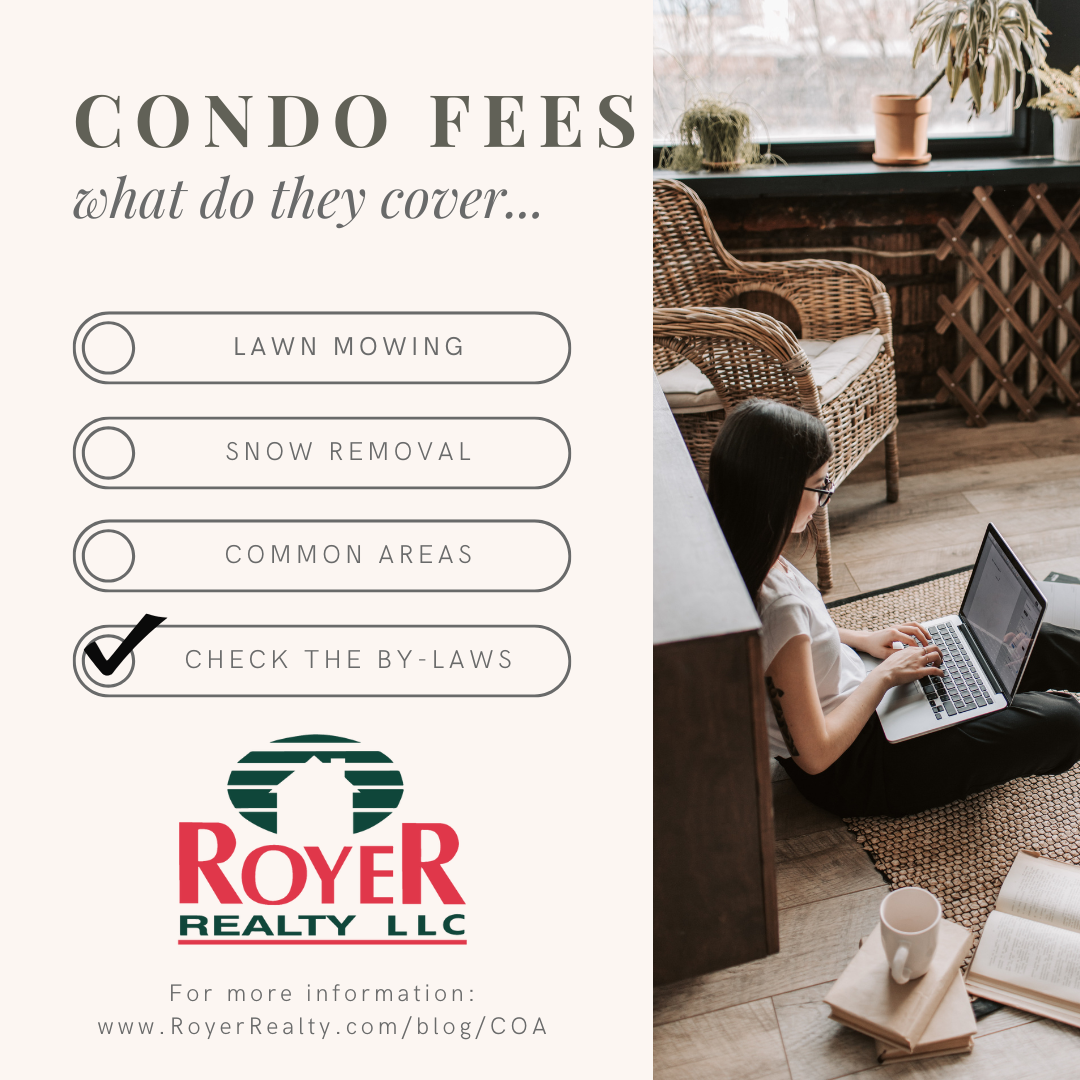
Condo Fees what do they cover


Understanding Your COA Fees: What’s Really Covered and Why It Matters


The most common items or features included in the Condo Owners Association (COA) fees for owners typically cover both maintenance and services provided by the association.

Here are some of the most frequent inclusions:

  1. Lawn Care and Landscaping
    This includes the upkeep of common areas like lawns, mulch, shrubs, and trees. Regular maintenance, such as mowing, trimming, and seasonal planting, is usually covered.
  2. Snow Removal
    In colder climates, snow removal from common areas, driveways, walkways, and parking lots is often a part of the fee, ensuring safety and accessibility during winter months.
  3. Utilities
    Some COAs include utilities such as water, sewer, trash removal, and sometimes even electricity or heating for common areas. In certain cases, these may also cover utilities for individual units, depending on the specific arrangement.
  4. Building Insurance
    The association often provides insurance for the exterior of the building, covering common areas, the structure itself, and sometimes including flood, fire, and liability coverage. Owners are generally responsible for insuring their individual units.
  5. Maintenance and Repairs of Common Areas
    This includes maintenance of shared spaces like hallways, lobbies, elevators, roofs, pools, gyms, parking lots, and any other shared amenities.
  6. Reserve Fund Contributions
    A portion of the COA fee typically goes toward a reserve fund for future major repairs and replacements, such as roof repairs, elevator upgrades, or pavement resurfacing.
  7. Management Fees
    If the association hires a property management company, the management fee would be covered by the COA fee. This often includes the cost of administrative services, accounting, and coordination of maintenance or repairs.
  8. Security Services
    If the community offers security services, such as gated entry, security guards, or surveillance cameras, these costs are typically included in the COA fee.
  9. Pest Control
    Regular pest control treatments for common areas or the entire building may be covered under the fee.
  10. Recreation Facilities
    Access to amenities like a pool, gym, clubhouse, or any other recreational facilities may be factored into the fee.
  11. Common Area Janitorial Services
    Regular cleaning and upkeep of common areas (lobbies, hallways, stairwells, bathrooms) are typically included in the COA fees.
  12. Cable or Internet (Sometimes)
    In some communities, basic cable or internet services are included in the COA fees, though this is less common and would depend on the specific condo association's arrangements.


These items and services are meant to maintain the quality and functionality of shared spaces, and the exact coverage can vary depending on the specific condo community's needs and agreements. It’s important to consult the bylaws to understand what specific services are covered for your particular association.


Furthermore, when buying or selling a condo, the purchase contract may outline whether condo fees are prorated at closing and identify who is responsible for any transfer fees if the HOA charges for a change of ownership.


Disclaimer:
It is important to note that each Condo Owners Association (COA) is unique, and the coverage provided by the COA fees can vary significantly from one community to another. The items and services listed above are common inclusions and may not apply to all associations. Therefore, it is essential for condo owners and potential buyers to carefully review the specific COA bylaws and governing documents of their community to fully understand what is included in their fees. This will help ensure clarity regarding responsibilities for maintenance, insurance, utilities, and other services. Properly understanding these details can prevent misunderstandings and ensure that all parties are aware of their financial obligations and rights within the community.


Posted in Buyers, Resources, Sellers
April 11, 2025

HomeBuyers Workshop 2025


Upcoming Event: HomeBuyers Workshop 2025 🏡

Are you ready to turn your dream of owning a home into a reality? Whether you're just starting out or revisiting the idea of homeownership, this is the workshop for you!

Join Aaron Francis of Royer Realty, along with Ryan Lane and Elisabeth Moore from The Middlefield Banking Company, for a free, in-person HomeBuyers Workshop designed to educate, inspire, and guide you through the home buying journey.

📅 Event Details:

Date: Tuesday, May 6, 2025
Location: Middlefield Banking Company – South Branch
📍 1454 South Main Street, Bellefontaine, OH

Two sessions available:
🔹 Noon – 1:00 PM
🔹 5:30 – 6:30 PM
Pick the time that works best for your schedule!

🗣 What You’ll Learn:

  • How the home buying process has evolved

  • Step-by-step guidance to homeownership

  • Exploring your loan options

  • Down payment assistance and incentive programs

  • Why having a buyer’s agent matters

  • Live Q&A to get your specific questions answered

This interactive session is perfect for first-time buyers, repeat buyers, or anyone looking to better understand the real estate landscape in 2025.

🔗 Make Your Reservation Today!

Secure your spot by registering online:
👉 Google Forms Registration Link – Click Here

📞 Questions?

Contact Aaron Francis at Royer Realty
📱 Call: 937-935-1172
🌐 Visit: www.royerrealty.com/aaron


Ready to Make Your Move?

Your journey to homeownership starts here. Don't miss this chance to gain insider knowledge from local experts and get your questions answered in a supportive, no-pressure environment. Whether you’re just beginning to think about buying or you’re actively searching, this workshop will empower you to make confident, informed decisions.

We can't wait to see you there and help you take the next step toward your dream home! 🏠💼


Royer Realty | The Realtors You Know and Trust
📍 Serving Bellefontaine & Surrounding Communities
📞 937-592-7653 | 🌐 www.royerrealty.com


April 8, 2025

Condo Associations Located in Logan County

Condo Associations Located in Logan County


Here’s a list (if we’ve missed any, comment below!):

  • Allen Woods Condominium
  • Anchor Lodge Condo
  • Autumn Woods Condo
  • Cranberry Condo
  • Cross Pointe Condo
  • Eagles Nest Condo
  • Green Tree Condo
  • Harbor View Condo
  • Harbourside On The Lagoon
  • Hunter's Ridge Condos
  • Indian Lake Harbourside
  • Indian Ridge Condo
  • Islander Boatel Condo
  • Iron City Estates Condo
  • Ludlow Bridge Condo
  • Northlake Estates Condo
  • Pirate's Cove At Indian Lake Condominium
  • Shawnee Island Condos
  • Snug Cove Storage Condo
  • Snug Harbour Condo
  • Tecumseh Cove Condo
  • Whetstone Commons Condo
  • Wright Place Condominium


Whether you're looking to buy, sell, or simply explore the condo options in Logan County, Ohio, knowing about the local condo associations is a great place to start. If you have more information or know of any condo associations we missed, feel free to leave a comment below! For further assistance with your real estate journey in Logan County, don’t hesitate to reach out to a local agent at Royer Realty who can guide you through your options. Start your search today and find the perfect community for you!

Posted in Resources
April 2, 2025

How much can a seller contribute towards a buyer’s closing costs?

blog image header - how much can a seller contribute towards buyer's closing costs?


How much can a seller contribute towards a buyer’s closing costs?


The amount of a buyer's closing costs a seller can pay depends on the type of loan the buyer is using. Here’s a general breakdown for each loan type and please consult your lender for actual figures for your specific situation:

Conventional Loans:
For conventional loans, the seller can contribute up to 3% of the purchase price if the buyer is putting down less than 10%. If the buyer's down payment is between 10% and 25%, the seller can contribute up to 6% of the purchase price. For a down payment of 25% or more, the seller can contribute up to 9%.

FHA Loans:
For FHA loans, the seller can contribute up to 6% of the purchase price toward the buyer’s closing costs. This can cover things like loan origination fees, title insurance, and prepaid taxes or insurance.

VA Loans:
For VA loans, the seller can pay up to 4% of the purchase price in closing costs and other concessions (like paying off the buyer’s debts or covering the buyer’s down payment). However, the seller is not allowed to pay certain fees, such as the buyer’s funding fee, unless they are agreed upon as part of the negotiations.

USDA Loans:
For USDA loans, the seller can contribute up to 6% of the purchase price toward the buyer's closing costs, which is similar to FHA loans.

Jumbo Loans:
For jumbo loans (loans that exceed conventional loan limits), the seller’s contribution may vary, but typically it is up to 3% of the purchase price, though it depends on the lender's guidelines and the buyer’s down payment amount.

Important Notes:

  • Seller contributions must be used for actual closing costs and cannot be applied toward the buyer's down payment unless specified by the lender.
  • These percentages may vary depending on the specific lender's policies and the buyer's circumstances, so it’s always best to confirm with the lender.

In many cases, seller contributions can help reduce the buyer’s out-of-pocket expenses at closing, making it easier for the buyer to complete the transaction.


Posted in Buyers, Resources, Sellers
March 25, 2025

Expenses connected to obtaining a mortgage

blog header image - Expenses connected to obtaining a mortgage

Expenses connected to obtaining a mortgage:


When getting a mortgage, several costs come into play beyond the loan itself. Here’s a breakdown of common terms you might encounter:


  1. Closing Costs: These are the fees associated with finalizing your mortgage and transferring ownership of the property. Closing costs typically include:
    • Loan origination fees: Charged by the lender for processing the loan.
    • Appraisal fee: The cost of having the property appraised to determine its value.
    • Title insurance and title search fees: Protect against any legal issues with property ownership.
    • Attorney fees: If applicable, for reviewing documents and closing the deal.
    • Recording fees: Paid to the local government to record the sale.
  2. Closing costs can average from 2% to 6% of the loan amount.

  3. Points: Points are upfront fees that you can pay to reduce your mortgage interest rate. One point equals 1% of the loan amount. There are two types:
    • Discount points: Paid to lower your interest rate.
    • Origination points: Paid to the lender for processing the loan.
  4. Paying points is an optional way to reduce your monthly payment, but it requires an upfront cost.

  5. Prepaids: These are expenses you pay in advance at closing, often including:
    • Property taxes: You may need to prepay a portion for the upcoming year.
    • Homeowners insurance: A portion of your insurance premium may be required to be prepaid.
    • Interest: You may need to pay interest for the period between closing and your first mortgage payment.
  6. Other Mortgage-Related Costs: These may include:
    • Private mortgage insurance (PMI): If your down payment is less than 20%, you may be required to pay PMI to protect the lender in case of default.
    • Escrow fees: If your lender sets up an escrow account, they will manage your property taxes and insurance payments.

All these costs can vary based on the lender, location, and loan type, so it’s important to get an estimate upfront. Always ask your lender for a detailed breakdown of all costs involved in your mortgage.


Please note that the fees mentioned above are not included in the payments displayed by most mortgage calculators. For a basic understanding of mortgage costs and affordability, we recommend using mortgage calculators as an educational tool before meeting with a lender. This will give you a better idea of what your mortgage payments may look like.


Be sure to request a comprehensive breakdown of all costs associated with your mortgage from your lender!


Also, check out our blog post about what documents you'll need to apply of a mortgage:

https://www.royerrealty.com/blog/getting-mortgage/


And, how to compare mortgages:

https://www.royerrealty.com/blog/loan-estimate/


Want to understand your mortgage expenses better?
At Royer Realty, we’re here to help you navigate the home buying process with confidence. Read our latest blog to get clear insights into mortgage costs and how they can impact your budget. Have questions? Call us at 937-592-7653 or visit www.royerrealty.com for personalized guidance tailored to your needs!

Posted in Buyers, Resources
March 22, 2025

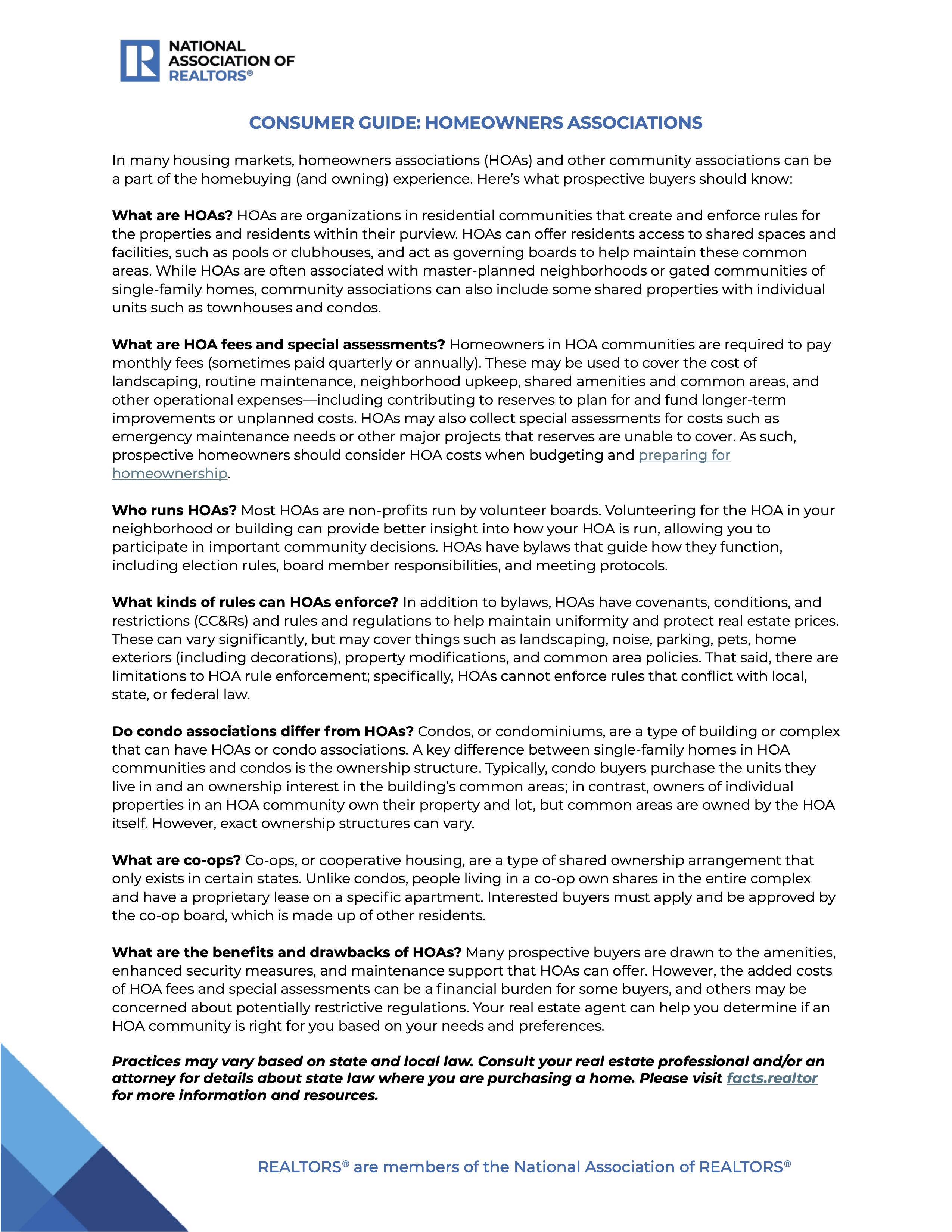
Consumer Guide: Homeowners Associations

Consumer Guide: Homeowners Associations

Consumer Guide: Homeowners Associations


https://www.nar.realtor/the-facts/consumer-guide-homeowners-associations?grp=all&narmail=EdgeUp-DataFeedTemplate&date=03-20-2025&user=6417067&itid=12938452

Posted in Buyers, Resources, Sellers
March 18, 2025

Home Buying Checklist

Here's a guide to the steps of buying a home!


Posted in Buyers, Resources
March 10, 2025

Home Seller Checklist

Here's a guide to the steps of selling a home!


Posted in Resources, Sellers
March 4, 2025

How to Become an Ohio REALTOR®: A Comprehensive Step-by-Step Guide

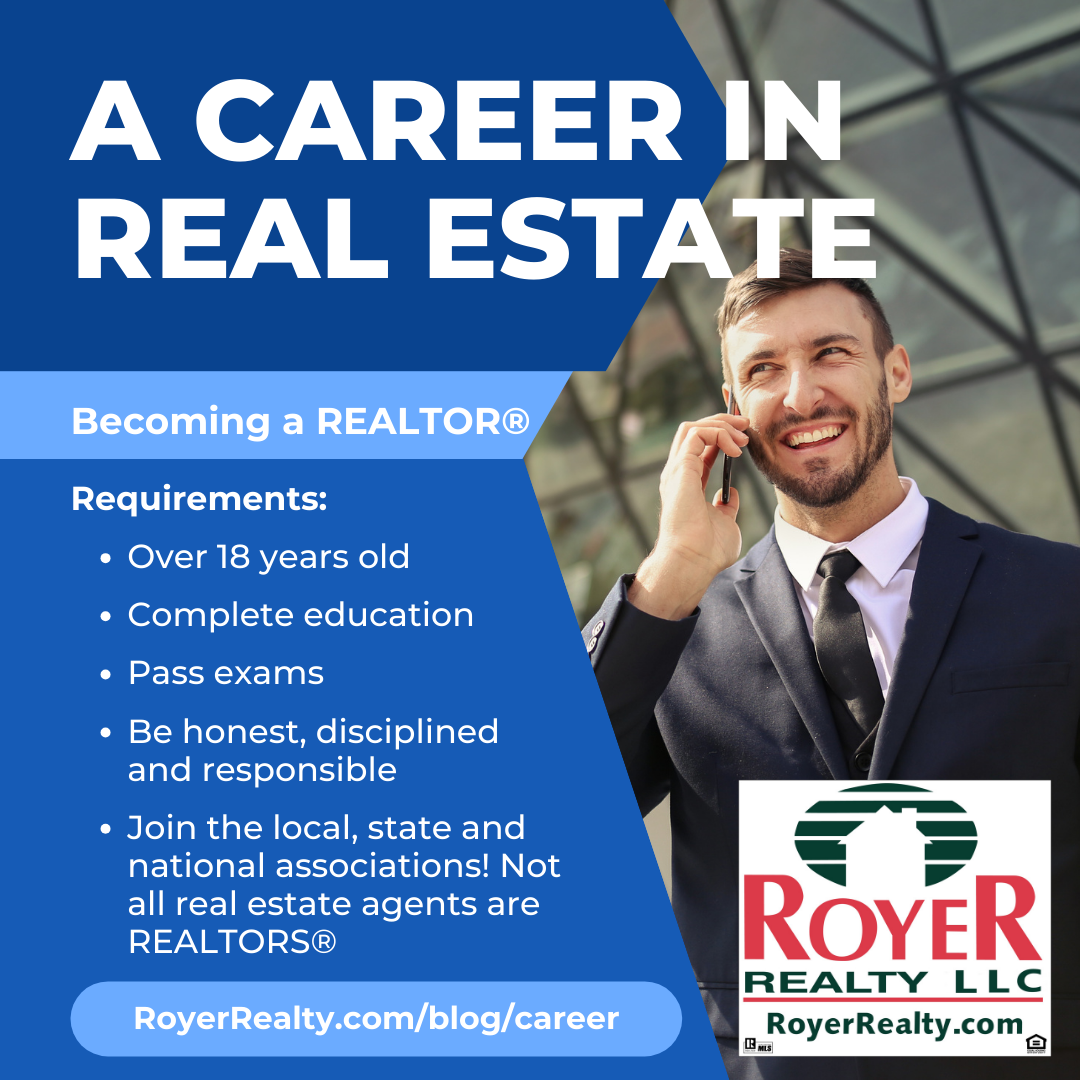
Career in Real Estate


How to Become an Ohio REALTOR®:
A Comprehensive Step-by-Step Guide

Are you interested in pursuing a career in real estate in Ohio? Becoming a licensed REALTOR® is a great way to build a rewarding career with flexibility, independence, and earning potential. Whether you’re new to the industry or exploring a career change, this guide will walk you through the necessary steps—from fulfilling state requirements to continuing education—so you can begin your journey to becoming an Ohio REALTOR® with confidence.

1. Understand the State Requirements for Becoming a REALTOR® in Ohio

Before diving into the education and testing process, it's essential to make sure you meet the state requirements. Here's an overview of the qualifications needed to obtain a real estate license in Ohio:

  • Age Requirement: You must be at least 18 years old.
  • Legal Status: You need to be a U.S. citizen, legal resident, or authorized immigrant.
  • Background Check: A criminal background check is required. Felony convictions or certain misdemeanor convictions may disqualify you.
  • Education: A high school diploma or GED is necessary.

2. Complete the Required Pre-Licensing Education

The next step toward becoming an Ohio REALTOR® is completing the 120 hours of state-approved pre-licensing education. This education covers essential topics such as real estate laws, principles, ethics, finance, and property management.

To help you meet this requirement, you can choose from accredited educational providers. Here are some reputable options:

  • Hondros College of Business: A well-known provider of online and in-person real estate education in Ohio. Hondros offers flexible courses designed to prepare you for both the exam and a successful career.
  • The CE Shop: Offers flexible online real estate pre-licensing courses that allow you to study at your own pace. Known for their comprehensive curriculum, The CE Shop is a great option for busy individuals.
  • Community Colleges - Partnered with Ohio REALTORS®

These courses will prepare you for the exam by covering the necessary material for both the national and state portions of the licensing exam.

3. Find a Sponsoring Broker

In Ohio, all real estate agents must work under a licensed broker. Once you have your ready to take the exams, you’ll need to find a broker to sponsor you, like Royer Realty. This step is important because your sponsoring broker will provide you with access to the Multiple Listing Service (MLS), help guide your early career, and ensure you're operating under the law.

Take time to interview potential brokers to find the right fit. Look for brokers who provide strong training programs, support, and opportunities for growth.

4. Pass the Ohio Real Estate Sales Exam

After finding a sponsoring broker, you must pass the Ohio Real Estate Sales Exam. This exam consists of two parts:

  • National Portion: Covers general real estate principles and concepts.
  • State Portion: Focuses specifically on Ohio's real estate laws, rules, and regulations.

Tips for Success:

  • Study thoroughly using exam prep materials, practice tests, and course notes.
  • Familiarize yourself with common topics such as property laws, contracts, finance, and real estate terminology.
  • Take advantage of prep courses or study guides, which can help boost your confidence and ensure you’re well-prepared for the exam.

A passing score on both sections is required to move forward in the process. These tests are taken at a specific testing facilities throughout Ohio and you must register for the exams; fees apply.

5. Apply for Your Ohio Real Estate License

Once you pass the exam, you can apply for your Ohio real estate license through the Ohio Division of Real Estate and Professional Licensing. You’ll need to submit the following:

  • Proof of completion of your pre-licensing education.
  • Your criminal background check results.
  • Proof of passing the state exam.
  • A completed application and payment of licensing fees.

Make sure you double-check your application for accuracy to avoid delays.


6. Complete Post-Licensing Education

After you become licensed, you are required to complete 20 hours of post-licensing education within your first year. This education helps deepen your knowledge of the real estate industry, covering advanced topics and ensuring you remain compliant with Ohio law.

Post-licensing education generally includes the following subjects:

  • Advanced real estate law and ethics
  • Real estate marketing and sales techniques
  • Understanding property management
  • Advanced real estate finance

7. Stay Current with Continuing Education (CE)

To maintain your Ohio real estate license, you’ll need to complete 30 hours of continuing education (CE) every three years. The CE courses cover important topics like:

  • Legal updates in real estate regulations
  • Changes in market trends
  • New tools and technologies in real estate

This ensures that you stay up-to-date and knowledgeable about any industry shifts or updates.

Continuing Education Providers:

  • Hondros College of Business: Offers CE courses that keep you current with the latest in Ohio real estate law and best practices.
  • The CE Shop: Offers online CE courses designed for busy agents, with a wide range of topics to choose from.
  • Many additional education providers are registered for continuing education!

8. Join the Ohio REALTORS® Association

After obtaining your license, you’ll need to become a member of Ohio REALTORS®, the state's professional association. As a member, you'll gain access to:

  • Networking events with other industry professionals
  • Marketing tools and resources to help grow your business
  • Advocacy for real estate professionals on legislative issues
  • Discounts on industry-related products and services
  • Educational resources such as workshops, seminars, and online courses

Additionally, by joining the association, you'll also become a member of the National Association of REALTORS® (NAR), which provides nationwide benefits and resources.

9. Get Involved with MOAR

Another excellent resource for Ohio REALTORS® is the Midwestern Ohio Association of REALTORS (MOAR). MOAR provides valuable tools for REALTORS® in the central Ohio region, including:

  • Networking events with other industry professionals
  • Marketing tools and resources to help grow your business
  • Advocacy for real estate professionals on legislative issues
  • Discounts on industry-related products and services
  • Educational resources such as workshops, seminars, and online courses

Being a part of MOAR ensures that you stay connected to the local real estate market and industry developments.

Key Takeaways

Becoming an Ohio REALTOR® involves completing educational requirements, passing the licensing exam, working under a broker, and continuing your education throughout your career. Whether you’re just starting or already licensed, the resources mentioned above can provide valuable tools to help you succeed.

Helpful Links:

By following these steps and utilizing the resources available to you, you’ll be well on your way to starting a successful and rewarding career as an Ohio REALTOR®. Good luck, and feel free to reach out to Royer Realty’s broker, Bryn Daring-Stewart, if you have any questions about becoming a REALTOR®.
 

Posted in Resources